On this page
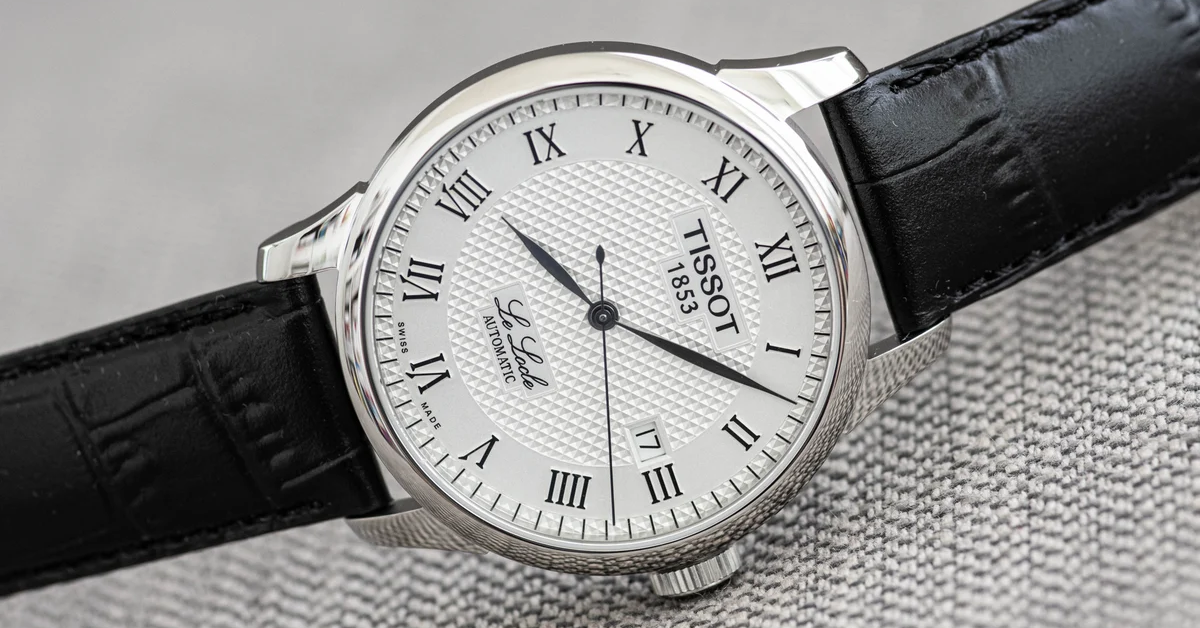
Le Locle is a small town in Switzerland's Jura Mountains where Tissot was founded in 1853 by Charles-Félicien Tissot and his son Charles-Émile, and where the brand's manufacturing has remained ever since. The town's watchmaking tradition dates back to 1705, and Le Locle is jointly UNESCO World Heritage-listed alongside neighboring La Chaux-de-Fonds for its grid-pattern industrial urbanism, designed specifically to optimize daylight and workflow for watchmaking. Tissot named its Le Locle collection directly after the town in 2003, with a dial pattern that references the local church clock tower.
Watch brands love invoking Switzerland in the abstract — the mountains, the precision, the vague sense of old-world craft. Tissot's relationship to place is more specific than that, and more interesting: it's still headquartered in the exact town where it was founded 173 years ago, in a region with a documented watchmaking tradition that predates the company itself by nearly 150 years. This is what Le Locle actually is, and why it's not just a name on a caseback.
A Watchmaking Town Before Tissot Existed
Le Locle's watchmaking history begins in 1705, when Daniel JeanRichard established the town's first organized watchmaking industry. He built it around a system called établissage — decentralized production where small, specialized workshops each handled a specific component, with a central workshop assembling the finished pieces. That model shaped how Swiss watchmaking operated across the Jura Mountains for the next two centuries, and it's part of why so many watch brands trace their roots to this specific, unglamorous stretch of Switzerland rather than to Geneva or Zurich.
By the time Charles-Félicien Tissot and his son Charles-Émile founded their own workshop in Le Locle in 1853, they were building on an already-established local trade, not starting one from scratch. Charles-Félicien worked as a casemaker, Charles-Émile as a watchmaker, and the two turned the lower floors of their family home into what would become Tissot's first factory.
A Town Built Around Watchmaking, Literally
In 2009, UNESCO jointly listed Le Locle and neighboring La Chaux-de-Fonds as a World Heritage Site — not for a single building or monument, but for the towns' grid-pattern urban layout itself. Both towns were deliberately designed in the eighteenth and nineteenth centuries to maximize daylight exposure and workflow efficiency for home-based and small-workshop watchmaking, the same établissage system JeanRichard had established a century earlier. It's one of relatively few UNESCO listings recognizing industrial urban planning specifically, and it reflects how thoroughly watchmaking shaped the physical structure of these towns, not just their economy.
Le Locle's watchmaking credentials extend well beyond Tissot. Zenith, maker of the influential El Primero chronograph movement, was founded there in 1865. Ulysse Nardin was founded there in 1846. Universal Genève originated there in 1894. Georges-Frédéric Roskopf's workshop, founded in Le Locle in 1844, went on to produce the pin-lever "Roskopf" pocket watch — credited with bringing reliable timekeeping within reach of working-class buyers across Europe for the first time. Tissot didn't build its reputation in isolation; it built it in one of the most concentrated watchmaking towns in Swiss history.
Charles-Émile Tissot and the Russian Trade
One detail that rarely makes it into brand summaries: Charles-Émile Tissot personally traveled to Russia starting in 1858 to sell the company's savonnette pocket watches across the Russian Empire, a market that became central to the young company's early growth. It's a useful reminder that Tissot's international reach isn't a recent marketing strategy — the company was actively exporting from Le Locle within five years of its founding.
The Le Locle Collection: A Deliberate Tribute
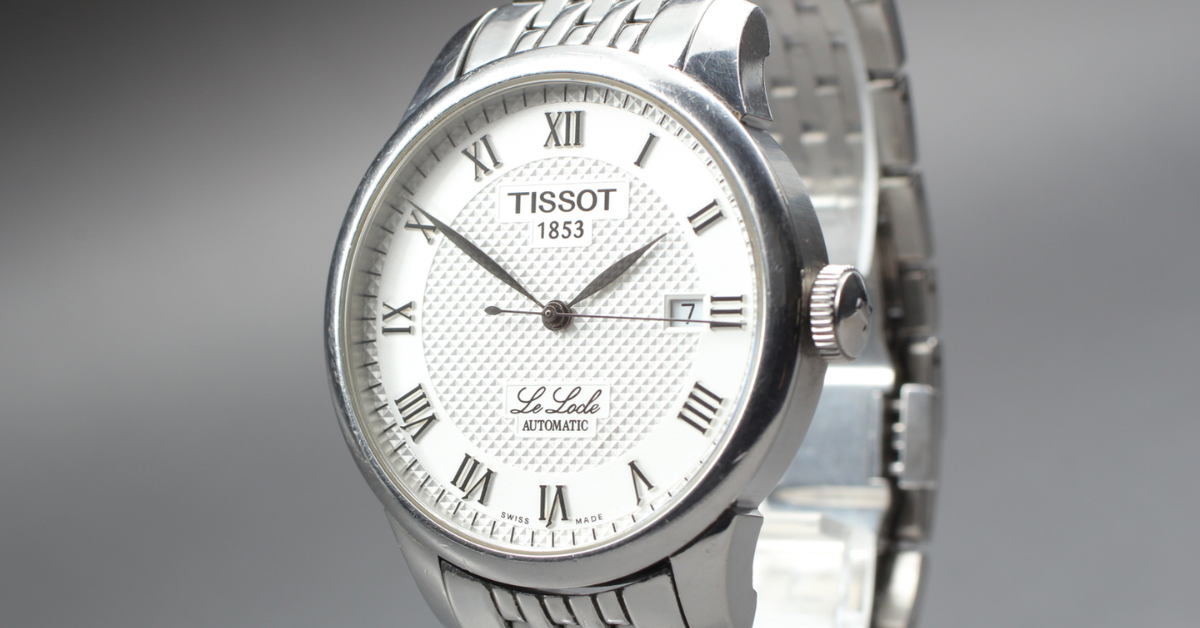
In 2003, marking its 150th anniversary, Tissot launched a watch named directly after its hometown. The Le Locle collection wasn't a coincidental name — the dial's Clous de Paris guilloché pattern was designed to echo the face of Le Locle's own church clock tower, and the collection has carried Roman numerals and a restrained, classical dial layout ever since, distinct from Tissot's sportier lines.
Current Le Locle models run on Powermatic 80 automatic movements with Nivachron balance spring technology — a Swatch Group-developed material resistant to magnetic fields, temperature shifts, and shock — and the range extends up to a gent's model with an 18-karat gold bezel that carries additional COSC chronometer certification. It's a collection built specifically to carry the weight of the town's name, rather than borrowing it for marketing convenience.
Why This Actually Matters for "Swiss Made"
Le Locle's continued role as Tissot's manufacturing base isn't just heritage marketing — it's directly tied to what makes the "Swiss Made" designation on every Tissot dial legally meaningful. Swiss law requires movement assembly and inspection to happen within Switzerland, and Tissot's Le Locle facility is where that requirement is met for the brand. We cover that legal standard, and how to verify it against a specific watch, in our guide on authenticating a Tissot against "Swiss Made" fakes — worth reading alongside this piece if you want the fuller picture of what that label actually guarantees.
What This History Adds for Buyers
None of this changes what a Tissot costs or how it performs on your wrist day to day. But it's a genuinely different kind of provenance than most watch brands can claim — a company still manufacturing in the exact town where it started, inside a region UNESCO has formally recognized for the industry that shaped it. That's a specific, checkable historical fact, not a vague appeal to "Swiss tradition" — the kind of detail that's worth knowing if you're the sort of buyer who cares where a watch actually comes from, not just what it says on the dial.
FAQ
Where is Tissot actually manufactured? Tissot has been based in Le Locle, Switzerland, since its founding in 1853, and the town remains central to the brand's manufacturing and its "Swiss Made" status today.
Why is Le Locle significant to Swiss watchmaking beyond Tissot? Le Locle's organized watchmaking tradition dates to 1705, and the town is also home to the origins of Zenith, Ulysse Nardin, and Universal Genève, among other historically significant Swiss brands.
Is Le Locle a UNESCO World Heritage Site? Yes — Le Locle and neighboring La Chaux-de-Fonds were jointly listed in 2009, recognized for their grid-pattern industrial urban design built to support home-based and small-workshop watchmaking.
What does the Tissot Le Locle watch collection reference? It was launched in 2003 for Tissot's 150th anniversary and named directly after the town, with a dial pattern designed to echo Le Locle's own church clock tower.
Does Tissot's Le Locle history affect its "Swiss Made" certification? Yes — Swiss law requires movement assembly and inspection within Switzerland, and Tissot's Le Locle facility is where that requirement is fulfilled for the brand's watches.
Conclusion
"Swiss watchmaking heritage" is one of the most overused phrases in the industry, which makes it easy to miss when a brand's version of it is actually specific and verifiable. Tissot's is: a real town, a documented 1705 watchmaking tradition, a UNESCO listing tied to the industry itself, and a company still headquartered exactly where it started. The Le Locle name on a Tissot dial isn't decoration — it's an address.
Editor-in-Chief
Editorial Team
The TissotWatches.blog editorial desk — independent watch journalism, reviews and buying advice.