On this page
- What "Swiss Made" Actually Requires
- Check the Dial Text First
- The Caseback Tells You More Than the Dial
- Look at the Movement, Not Just the Ticking
- Serial Numbers and Documentation
- Weight, Bracelet and Clasp: The Details Fakes Skip
- Price Is Still the Biggest Red Flag
- If You're Still Not Sure
- FAQ
- Conclusion
To authenticate a Tissot watch, check five things: the "SWISS MADE" text position on the dial (genuine Tissot places it at 6 o'clock, evenly spaced), the caseback engraving depth and font, the movement through a clear caseback if present (ETA or Powermatic 80 calibers, not generic quartz modules), the serial number format matching Tissot's records, and the weight and bracelet clasp action, which counterfeiters consistently get wrong. Buying from an authorized Tissot retailer remains the only way to guarantee authenticity with zero guesswork.
"Swiss Made" is one of the most misused phrases in the watch world, and Tissot happens to sit right in the price range where counterfeiters find it most worth faking. It's affordable enough to sell in volume, recognizable enough that people want the name, and — until you actually know what to look for — easy enough to fake convincingly at a glance.
The good news is that Tissot counterfeits, even the decent ones, almost always fail somewhere specific. You just need to know where to look. This guide walks through the real authentication points, not the vague "just trust your gut" advice that gets repeated everywhere else.
What "Swiss Made" Actually Requires
Before getting into fakes, it's worth understanding what the label is supposed to guarantee, because a lot of counterfeiters lean on buyers not knowing this.
Swiss law (revised in 2017) requires that at least 60% of a watch's manufacturing costs occur in Switzerland, and for the movement specifically, it must be assembled and inspected in the country. Tissot, as part of the Swatch Group, meets this comfortably — its movements come from ETA, also a Swatch Group company, and final assembly happens at Tissot's facility in Le Locle.
That's a legal standard, not a marketing phrase. A watch stamped "Swiss Made" that doesn't meet it is committing fraud, not just being cheeky with branding — which is exactly why the stamp itself is one of the first things worth scrutinizing.
Check the Dial Text First
Start here, because it's the fastest tell and the one counterfeiters get wrong most often.
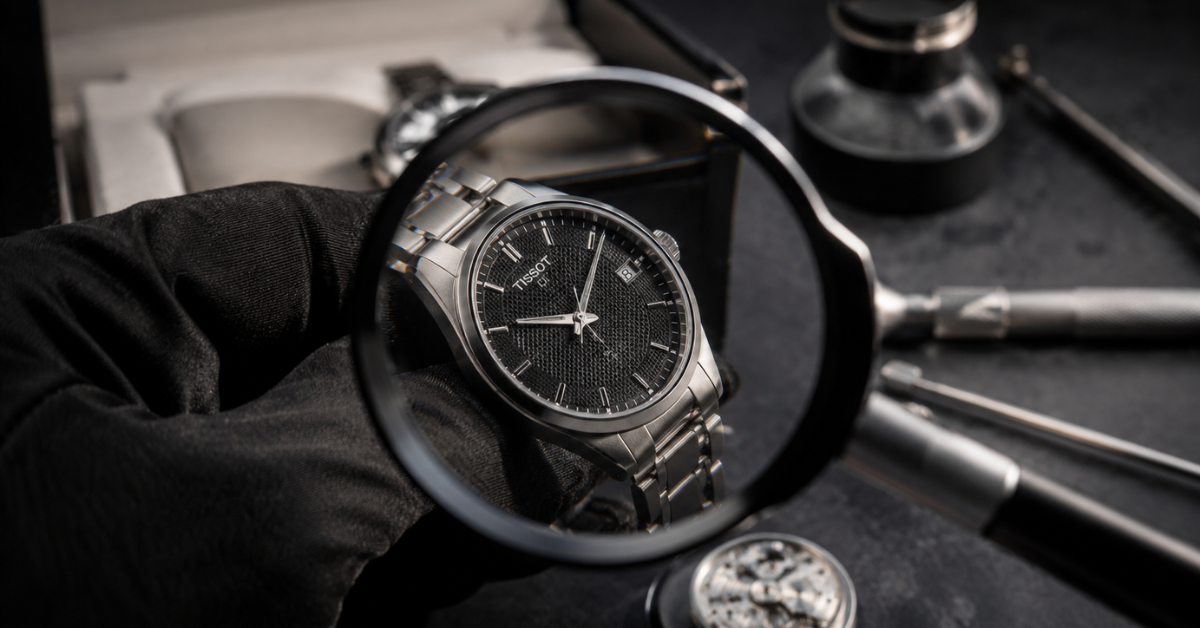
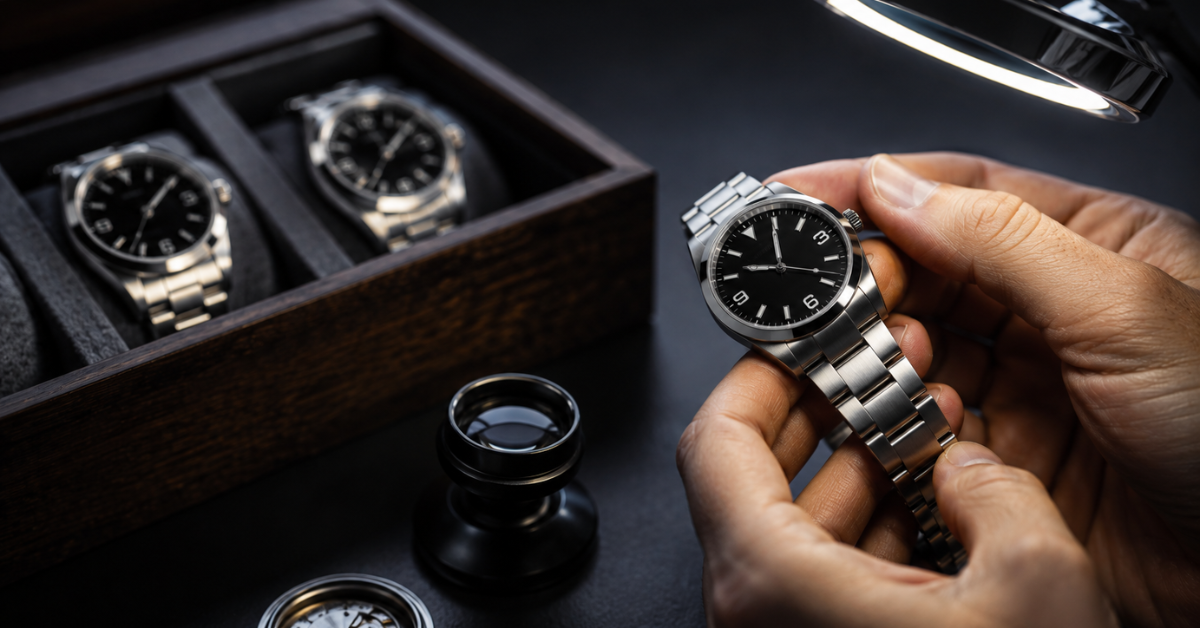
On a genuine Tissot, "SWISS MADE" sits at the bottom of the dial, typically at the 6 o'clock position, in clean, evenly kerned lettering that matches the weight of the other dial text. Fakes frequently get the spacing wrong — letters too tight or too spread out — or use a font that's subtly different from the rest of the dial's typography. Hold it under a loupe or a strong macro photo if you can. Printing quality on a real Tissot dial is sharp at the edges; cheap fakes often show slight bleed or fuzziness, especially on smaller text like model names.
If you're comparing against a specific reference, our PRX Powermatic 80 review has close-up dial photography that's useful as a reference point for what genuine printing should look like.
The Caseback Tells You More Than the Dial
Casebacks are where a lot of fakes fall apart, mostly because they're expensive to replicate well and counterfeiters cut corners here more than anywhere else on the watch.
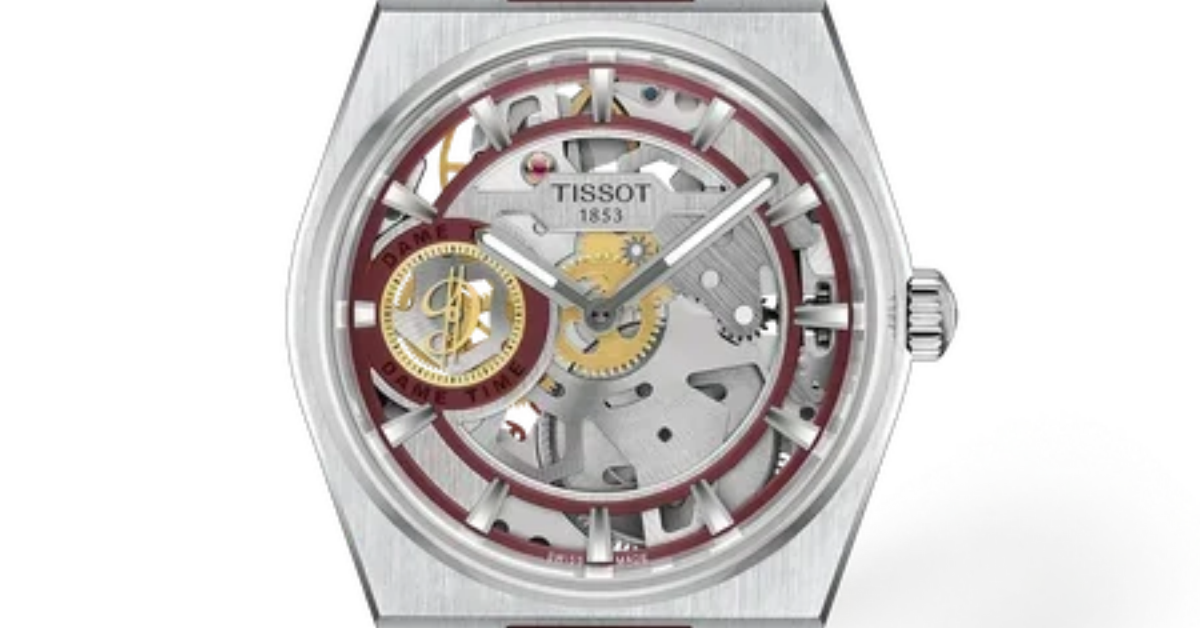
Genuine Tissot casebacks have deeply, precisely engraved text — model reference, water resistance rating, "STAINLESS STEEL" or the relevant case material, and often a small Tissot logo. The engraving should feel crisp under a fingernail, not shallow or slightly blurred. On models with an exhibition caseback (the PRX Powermatic 80 and several Heritage pieces, for instance), you should be able to see the movement clearly through sapphire crystal — not through a cheaper, slightly cloudy mineral crystal substitute, which is a common cost-cutting swap on fakes.
Look at the Movement, Not Just the Ticking
This is the one that separates a decent fake from an obvious one, and it's also the one most buyers skip because it requires actually opening the watch or finding a clear caseback model.
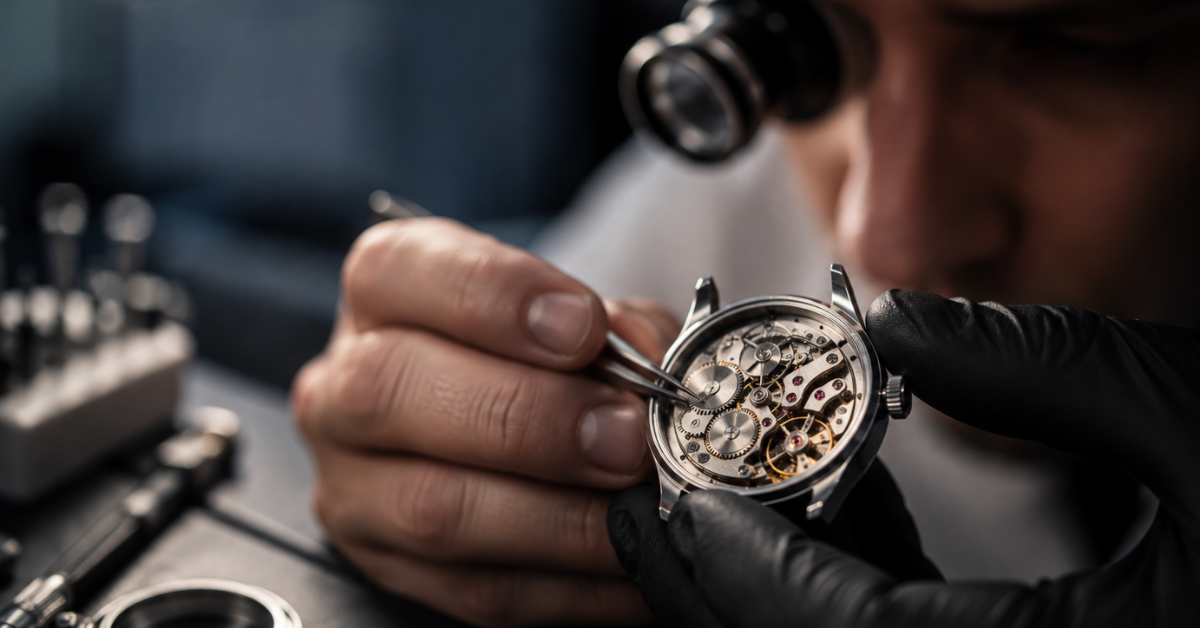
Tissot uses ETA movements across most of its automatic lineup, and Powermatic 80 calibers (a Tissot-specific ETA variant with an 80-hour power reserve) on higher-tier pieces like the PRX Powermatic 80 and Gentleman Powermatic 80. These movements have a distinct finish — visible bridges, a balance wheel that beats at a consistent, smooth rate, and branding stamped directly onto the rotor or bridge. Counterfeits almost always substitute a generic, unbranded automatic movement that looks close from a distance but has none of that finishing, and it typically runs with a noticeably rougher, faster-ticking sweep.
If your watch has a display caseback, our Tissot Powermatic 80 owner's care guide shows what a genuine Powermatic 80 looks like in detail — worth comparing side by side.
Serial Numbers and Documentation
Every genuine Tissot carries a serial number, usually engraved on the caseback or, on some models, between the lugs. Authorized dealers can verify this number against Tissot's records, and it should also match any warranty card or box that came with the watch.
Be cautious of sellers who can't produce a serial number that matches what's actually on the watch, or who offer a "certificate of authenticity" that isn't from Tissot or an authorized retailer — third-party authenticity certificates carry no real weight and are sometimes issued by the same networks selling the fakes.
Weight, Bracelet and Clasp: The Details Fakes Skip
Counterfeiters can get printing and even movements reasonably close these days, but weight and mechanical feel are harder to fake because they require the same materials and tolerances, which cost real money.
A genuine Tissot in steel has a specific heft — not heavy for its size, but solid, with no hollow feeling when you tap the case. Bracelet links should sit flush with no visible gaps, and the clasp should close with a firm, single motion rather than requiring wiggling or multiple attempts. Cheap fakes often use lighter alloys and stamped, thinner bracelet links that flex more than they should.
Price Is Still the Biggest Red Flag
None of the checks above should be necessary if you buy from the right place — and price is usually the first sign something's off before you even get to inspecting the watch itself.
A steep discount on a current-production Tissot, especially from a marketplace listing, private seller, or unfamiliar website, is the most reliable early warning sign. Legitimate discounting happens, particularly through authorized retailers during sales periods, but a PRX Powermatic 80 or Seastar listed at half its normal retail price from an unverified seller should raise questions before you even get to inspecting the watch.
If you're buying secondhand and want a fuller framework beyond authentication alone — documentation, condition grading, and which marketplaces are actually trustworthy — our guide on buying a pre-owned Tissot covers the full process.
If You're Still Not Sure
Two options that remove the guesswork entirely: bring the watch to an authorized Tissot service center for inspection, or buy new from an authorized dealer in the first place, which sidesteps the entire problem. If you're shopping for your first Tissot and want to avoid this whole situation from the start, our beginner's guide to buying your first Tissot walks through where to buy with confidence.
FAQ
How can I tell if my Tissot is real by the caseback alone? Genuine Tissot casebacks have deep, crisp engraving and, on display-back models, a clear sapphire crystal window showing a finished, branded movement — fakes typically show shallower engraving and a cloudier crystal.
Do fake Tissots use real Swiss movements? No. Most counterfeits use generic, unbranded automatic or quartz movements that look similar at a glance but lack the finishing, branding, and consistent beat rate of a genuine ETA or Powermatic 80 caliber.
Where should I buy a Tissot to avoid counterfeits entirely? Authorized Tissot retailers and the brand's official boutiques are the only channels that guarantee authenticity without any inspection needed on your part.
Is a low price always a sign of a fake Tissot? Not always — authorized retailers do run legitimate sales — but a steep discount from an unfamiliar seller or marketplace listing is one of the most common warning signs and worth treating with extra scrutiny.
Can a jeweler or watchmaker authenticate a Tissot for me? Yes. An authorized Tissot service center or an experienced independent watchmaker can inspect the movement and confirm authenticity, particularly if you're unsure after checking the visual details yourself.
Does "Swiss Made" on the dial guarantee the watch is genuine? No. The label reflects a legal manufacturing standard, but it can be printed fraudulently on a counterfeit dial just like any other text — it's one data point, not proof on its own.
Conclusion
Most fake Tissots give themselves away in the first sixty seconds, once you know where to look — the dial printing, the caseback depth, the movement finish, the weight in your hand. None of it requires special equipment, just attention to the details counterfeiters consistently rush past. When in doubt, an authorized dealer or service center will settle it in minutes.
Editor-in-Chief
Editorial Team
The TissotWatches.blog editorial desk — independent watch journalism, reviews and buying advice.