On this page
- The Question Every Tissot Owner Eventually Asks
- Same Family, Different Rungs
- History and Heritage
- Tissot: Founded 1853
- Longines: Founded 1832
- Movements: Closer Than You'd Think
- Tissot Powermatic 80
- Longines L888
- What That Means for You
- Where Longines Really Pulls Ahead: Finishing
- Head to Head: Real Model Comparisons
- Everyday Watch: Tissot Gentleman 38mm vs Longines Conquest 38mm
- Dive Watch: Tissot Seastar vs Longines HydroConquest
- Chronograph: Tissot vs Longines
- Price: How Big Is the Gap?
- Resale Value: Neither Is an Investment
- Is Longines a Luxury Brand? Is Tissot?
- So, Is the Upgrade Worth It?
- Upgrade to Longines If...
- Stay With Tissot If...
- Frequently Asked Questions
- Is Longines better than Tissot?
- Are Tissot and Longines owned by the same company?
- How much more expensive is Longines than Tissot?
- Do Tissot and Longines use the same movements?
- Does Longines hold its value better than Tissot?
- Is Longines a luxury brand?
- The Bottom Line
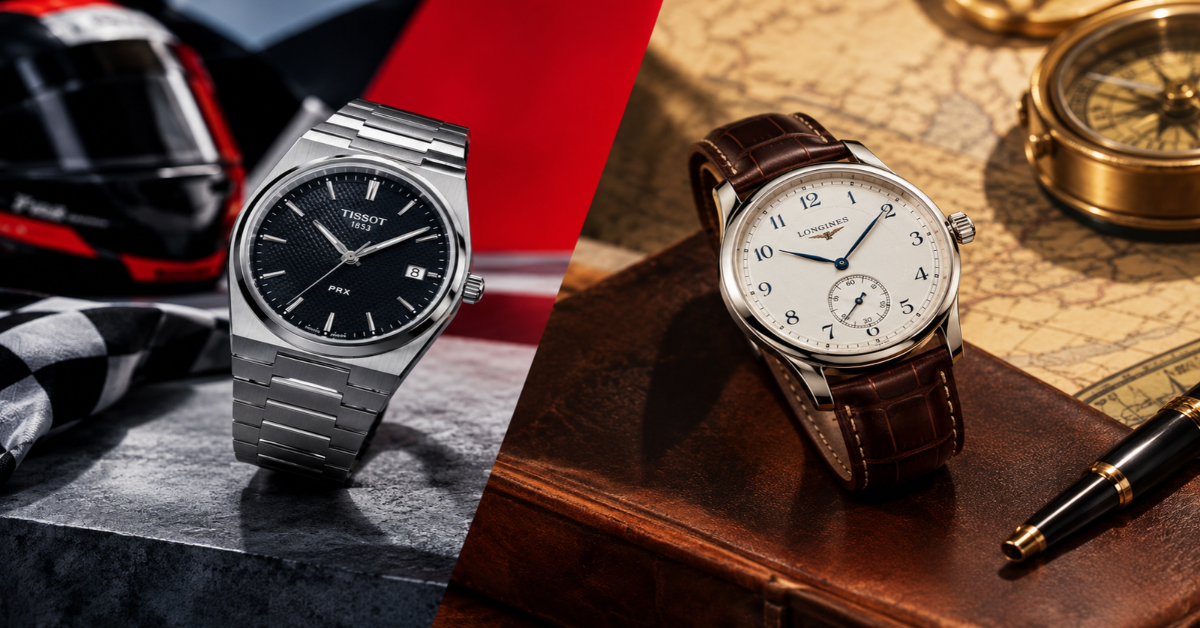
The Question Every Tissot Owner Eventually Asks
Most people buy a Tissot as their first proper Swiss watch. It's affordable, reliable and looks far more expensive than it is. Then, a year or two later, a familiar thought appears: what's the next step up?
For many people, the answer is Longines. It's the natural next rung on the ladder: still sensibly priced, still from the same Swiss group, but with more polish and more prestige.
The question is whether that extra $1,200 or more actually buys you a better watch, or mostly a better logo. We compared the two brands side by side on history, movements, build quality, price and resale value to find out.
Same Family, Different Rungs
Both brands belong to the Swatch Group, the world's largest watch group. Within it, each brand has a clear position:
- Tissot: accessible Swiss watches, mostly from about $300 to $1,000, with a few models above
- Hamilton: a similar price level to Tissot, with an American heritage. See our Tissot vs Hamilton comparison.
- Longines: the step up, mostly from about $1,000 to $5,000
- Omega: the group's luxury flagship above Longines
Because they share a parent company, Tissot and Longines also share technology. That's a big part of why this comparison is closer than the price gap suggests.
History and Heritage
Tissot: Founded 1853
Tissot was founded in 1853 in Le Locle, in the Swiss Jura. It built its reputation on innovation and accessibility, with milestones like early anti-magnetic watches and pioneering touch-screen watches. Today, it's one of the best-selling Swiss watch brands in the world.
Longines: Founded 1832
Longines is slightly older, founded in 1832 in Saint-Imier. Its winged hourglass logo is one of the oldest registered trademarks still in use. The brand has deep roots in aviation and sport, including the Lindbergh Hour Angle watch from the 1930s, designed with the aviator Charles Lindbergh.
Both brands have genuine Swiss heritage. Longines simply carries a slightly more elegant, upmarket image, which is a big part of what you pay for.
Movements: Closer Than You'd Think
This is where the comparison gets interesting.
Tissot Powermatic 80
Most Tissot automatics under $1,000 use the Powermatic 80. It's based on the proven ETA 2824 architecture, upgraded for an 80-hour power reserve and fitted with a Nivachron balance spring for better resistance to magnetism. To reach 80 hours, it beats at 21,600 vibrations per hour (3Hz).
Longines L888
Many Longines automatics use the L888 family, built on a related Swiss base and refined for Longines. The latest L888.5 offers a 72-hour power reserve, beats slightly faster at 25,200 vibrations per hour (3.5Hz), and uses a silicon balance spring, which is highly resistant to magnetism and temperature changes.
What That Means for You
- Power reserve: Tissot wins, with 80 hours vs 72.
- Smoothness: Longines' faster beat gives a slightly smoother seconds hand.
- Hairspring: Longines' silicon spring is a step up in long-term stability and anti-magnetism.
- Servicing: both are widely serviceable within the Swatch Group network.
In daily wear, most owners won't notice a big difference. For the full breakdown of Tissot's movement range, read Tissot movements explained.
Where Longines Really Pulls Ahead: Finishing
If the movements are close, where does the extra money go? Mostly into how the watch is made and finished.
- Case finishing: Longines cases typically show sharper transitions between brushed and polished surfaces.
- Dials: more depth, finer printing and higher-quality applied markers.
- Bracelets: generally more solid and better finished, with more refined clasps.
- Overall feel: a Longines simply feels denser and more expensive in the hand.
Reviewers often say the same thing about Longines' recent models: they look and feel more expensive than their price suggests. That's exactly the upgrade you're buying.
Head to Head: Real Model Comparisons
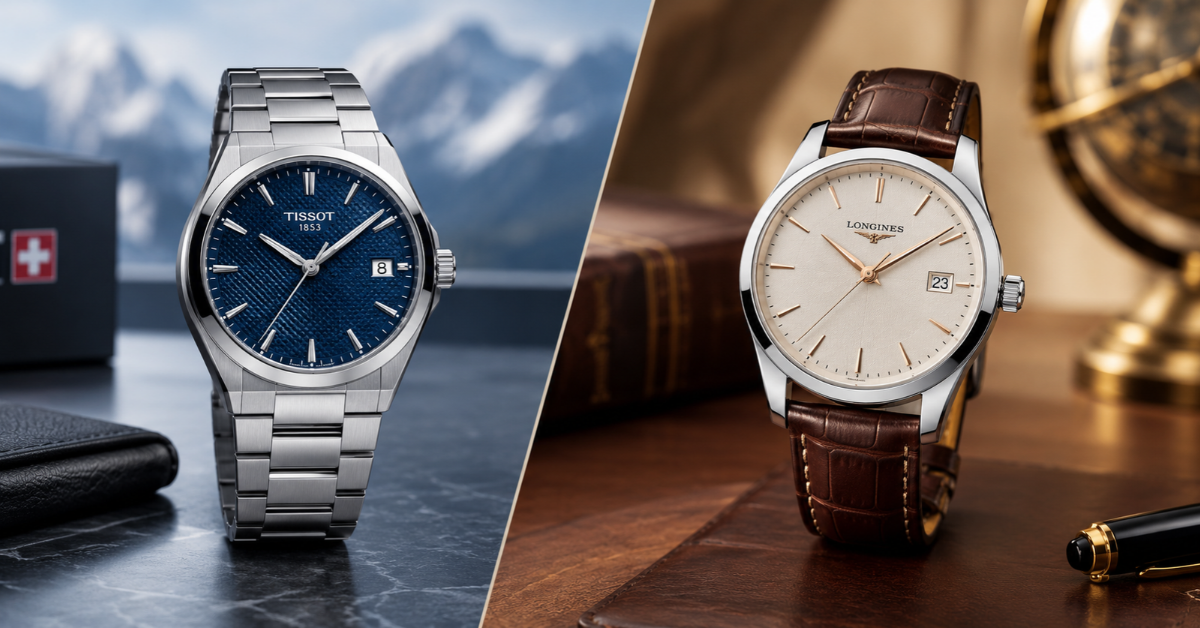
Everyday Watch: Tissot Gentleman 38mm vs Longines Conquest 38mm
- Tissot Gentleman 38mm: $850, Powermatic 80 (80 hours), 100m water resistance
- Longines Conquest 38mm: about $2,075 to $2,400 depending on version, L888.5 (72 hours, silicon spring), 38mm, 10.9mm thick, 100m water resistance
This is the most direct comparison. Both are versatile 38mm sports-elegant watches. The Conquest is slimmer and more refined, and reviewers have even called it an affordable alternative to Omega's Aqua Terra. The Gentleman offers a longer power reserve for about a third of the price. Read our full take on whether the Gentleman 38mm is the best Swiss watch under $1,000.
Dive Watch: Tissot Seastar vs Longines HydroConquest
- Tissot Seastar 1000 Powermatic 80: a 300m diver well under $1,000 with an 80-hour reserve
- Longines HydroConquest (2026): from $2,200, 39mm or 42mm, 300m, L888.5 (72 hours), ceramic bezel, silicon spring
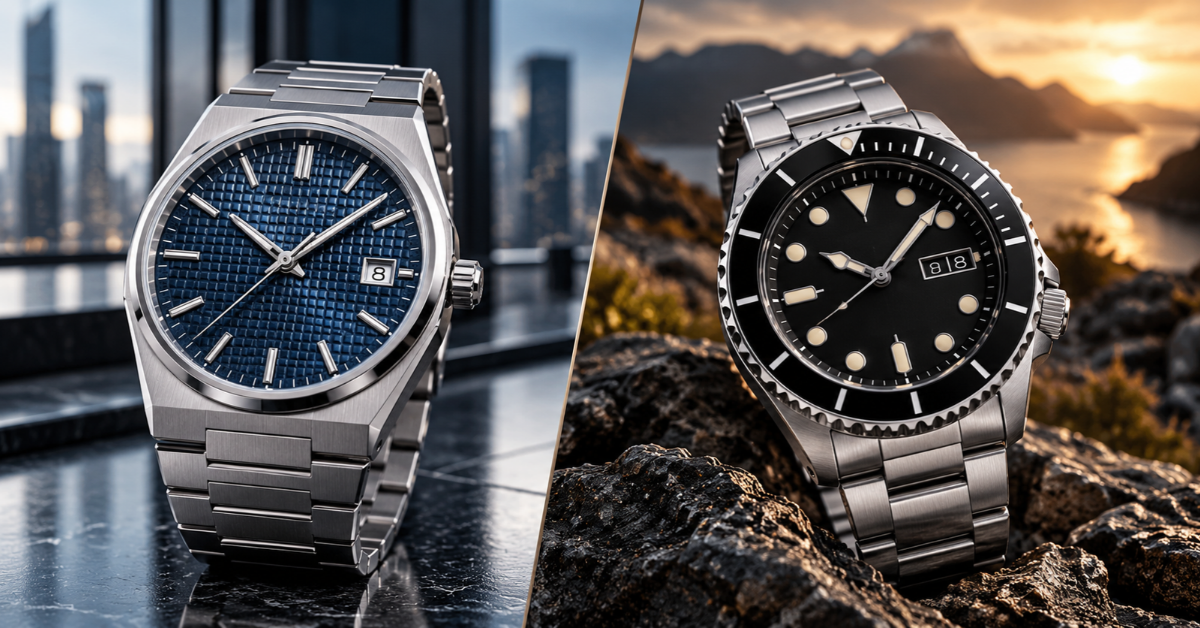
Longines redesigned the HydroConquest in March 2026, adding a ceramic bezel and upgraded bracelet. It's a seriously well-specified diver. But the Seastar 1000 gives you most of the same core function for far less. See our Tissot Seastar 1000 review and Seastar 2000 vs 1000.
Chronograph: Tissot vs Longines
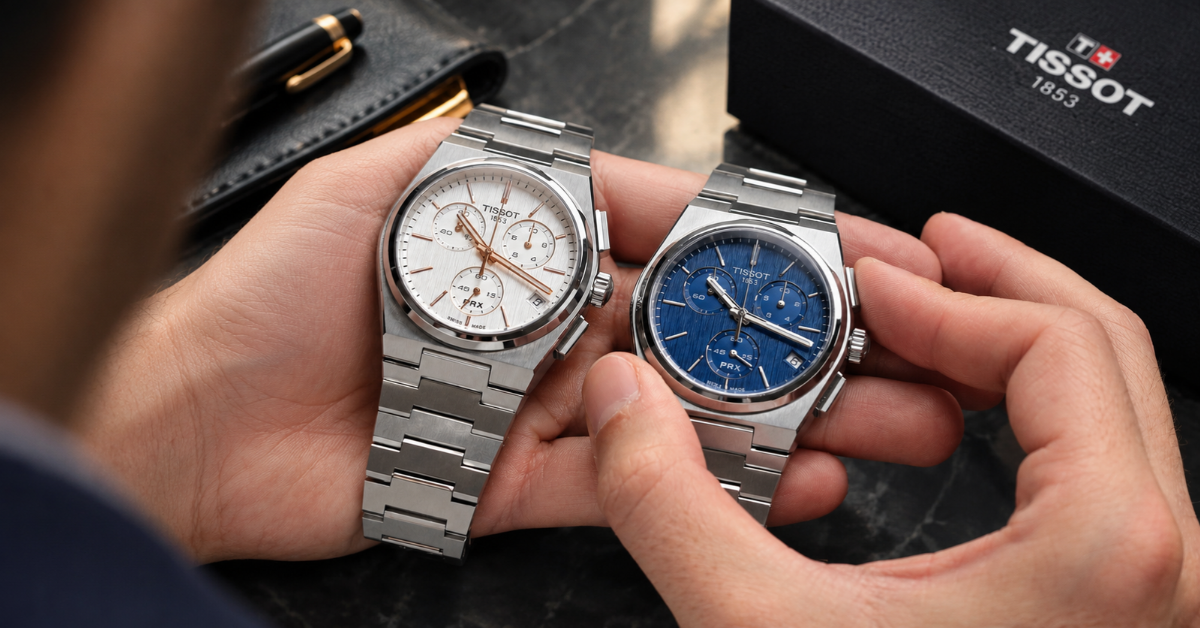
Tissot's PRX Automatic Chronograph costs about $2,150, putting it in Longines territory. At that level, the comparison becomes much tighter, and Longines' finishing advantage matters more. On the other hand, Tissot's new $525 PRX Quartz Chronograph has no real Longines equivalent at that price. Here's our PRX Quartz Chronograph vs Automatic comparison.
Price: How Big Is the Gap?
- Tissot automatics: mostly about $700 to $1,000 (Gentleman 38mm $850, PR516 38mm $825, Visodate $850 to $950)
- Longines automatics: mostly about $2,000 to $3,000 (Conquest 38mm about $2,075 to $2,400, HydroConquest from $2,200)
In general, a Longines costs roughly two to three times as much as the closest Tissot. You're paying that premium for finishing, materials and brand prestige, not dramatically better timekeeping.
Resale Value: Neither Is an Investment
Both brands lose value when resold, so buy either one to wear, not to flip.
WatchCharts data shows the Longines Conquest 38mm trading at roughly $1,400 to $1,500 on the pre-owned market, well below its retail price. Tissot follows a similar pattern. Our analysis of whether a Tissot is a good investment breaks down the numbers.
There's a silver lining here: because Longines depreciates, a lightly used one can be a smart way to get the upgrade for much closer to Tissot money.
Is Longines a Luxury Brand? Is Tissot?
Longines is generally seen as entry-level luxury, a step below Omega and well above fashion brands. Tissot is usually considered an accessible or "affordable luxury" Swiss brand. Both make genuine Swiss watches, and both meet the legal requirements for "Swiss Made." If you're curious about the details, read whether Tissot is still considered a luxury brand and what "Swiss Made" actually means.
So, Is the Upgrade Worth It?
Upgrade to Longines If...
- You care about finishing, dial quality and how the watch feels in the hand
- You want a more prestigious name on the dial
- You'd like a silicon balance spring and a slightly smoother seconds hand
- You already own a Tissot and want something clearly a step above
Stay With Tissot If...
- You want the best value for money in a Swiss automatic
- You prefer a longer 80-hour power reserve
- You'd rather own two or three great watches than one more expensive one
- This is your first proper watch. Here's why so many people start with Tissot.
Our verdict: for most first-time buyers, Tissot is the smarter starting point. For the second or third watch, Longines is a genuinely worthwhile upgrade, especially if you can find a lightly used one at a good price.
Frequently Asked Questions
Is Longines better than Tissot?
Longines is positioned above Tissot, with better finishing, more refined cases and bracelets, and features like silicon balance springs. Tissot offers better value for money and a longer 80-hour power reserve in its Powermatic 80 watches.
Are Tissot and Longines owned by the same company?
Yes. Both Tissot and Longines are owned by the Swatch Group, which also owns Omega, Hamilton and other Swiss brands. Longines sits above Tissot and below Omega in the group's line-up.
How much more expensive is Longines than Tissot?
A comparable Longines usually costs two to three times as much as a Tissot. For example, the Tissot Gentleman 38mm costs $850, while the Longines Conquest 38mm costs about $2,075 to $2,400.
Do Tissot and Longines use the same movements?
They use related movements. Tissot's Powermatic 80 offers 80 hours of power reserve at 21,600 vph, while Longines' L888.5 offers 72 hours at 25,200 vph with a silicon balance spring. Both are based on proven Swiss architectures.
Does Longines hold its value better than Tissot?
Neither brand holds its value well. Both typically sell below retail on the pre-owned market. The Longines Conquest 38mm, for example, trades at roughly $1,400 to $1,500 used.
Is Longines a luxury brand?
Longines is generally considered an entry-level luxury Swiss brand, positioned above Tissot and below Omega within the Swatch Group.
The Bottom Line
Longines doesn't keep better time than Tissot, and it doesn't hold its value much better either. What it does offer is a watch that feels more special: finer finishing, a richer dial and a name with a little more weight.
If that matters to you, the upgrade is worth it. If you just want a brilliant Swiss automatic you'll wear every day, Tissot already gives you almost everything for a fraction of the price.
Senior Writer
James Whitfield
Senior watch writer with a decade covering Swiss horology, vintage markets and modern releases.