On this page
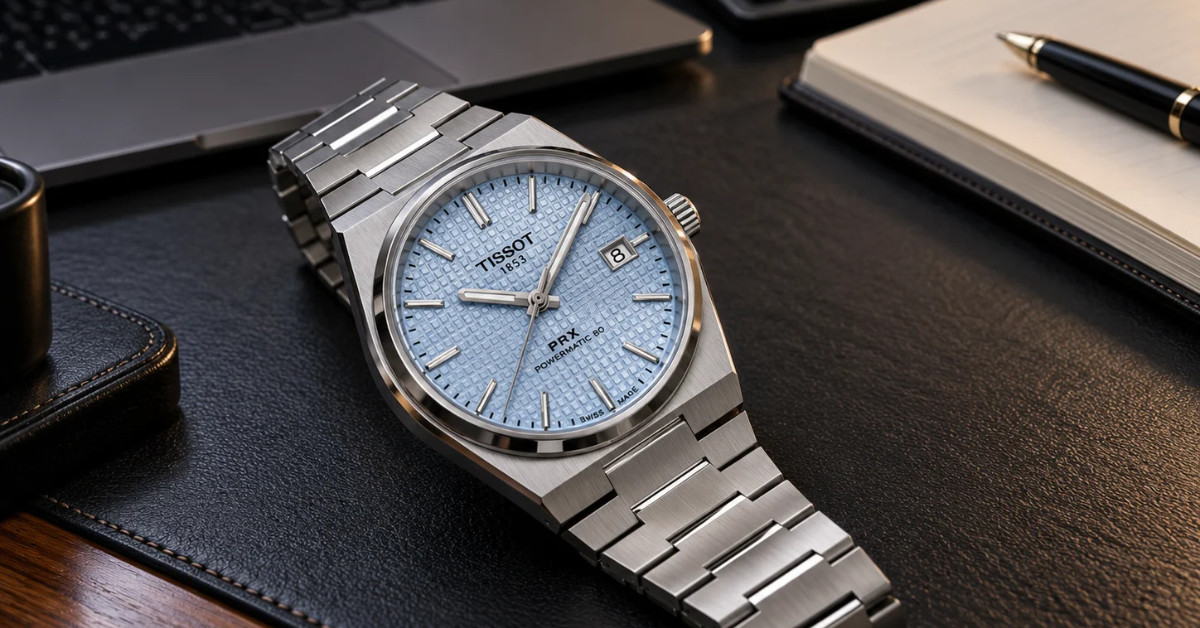
"Is it a good investment" is the wrong first question for almost any watch under $2,000, and it's worth saying that plainly before digging into Tissot specifically. But the data behind that answer is genuinely more interesting than a flat no, because it reveals exactly which references defy the pattern and why — information that's actually useful whether you're buying to wear or hoping to get some of your money back eventually.
The Blunt Answer, First
Tissot is not an investment brand. It sits in the accessible tier of Swiss watchmaking, produced in real volume, sold through wide retail distribution, with essentially no allocation scarcity driving secondary-market demand the way it does for a handful of Rolex sports references. That combination — volume plus availability — is close to the textbook recipe for depreciation, and Tissot's own numbers confirm it.
Where the Data Actually Backs That Up
The clearest example sits at the top of Tissot's most talked-about current line. Our analysis of the fastest-depreciating Tissot model found that the PRX Quartz commonly loses more than 50% of its retail value on resale — a genuinely steep drop, and specifically worse than the PRX Powermatic 80 automatic version of the same design, which still depreciates but settles closer to a 45% loss. Entry-level quartz references across Tissot's catalog generally follow a similar pattern, losing real value quickly simply because an identical new example is always available at retail with no wait.
That's the rule. The exceptions are where this gets genuinely interesting.
The References That Actually Hold Value
This is worth taking seriously, because it isn't a vague brand-loyalty claim — it's specific, tracked, and documented.
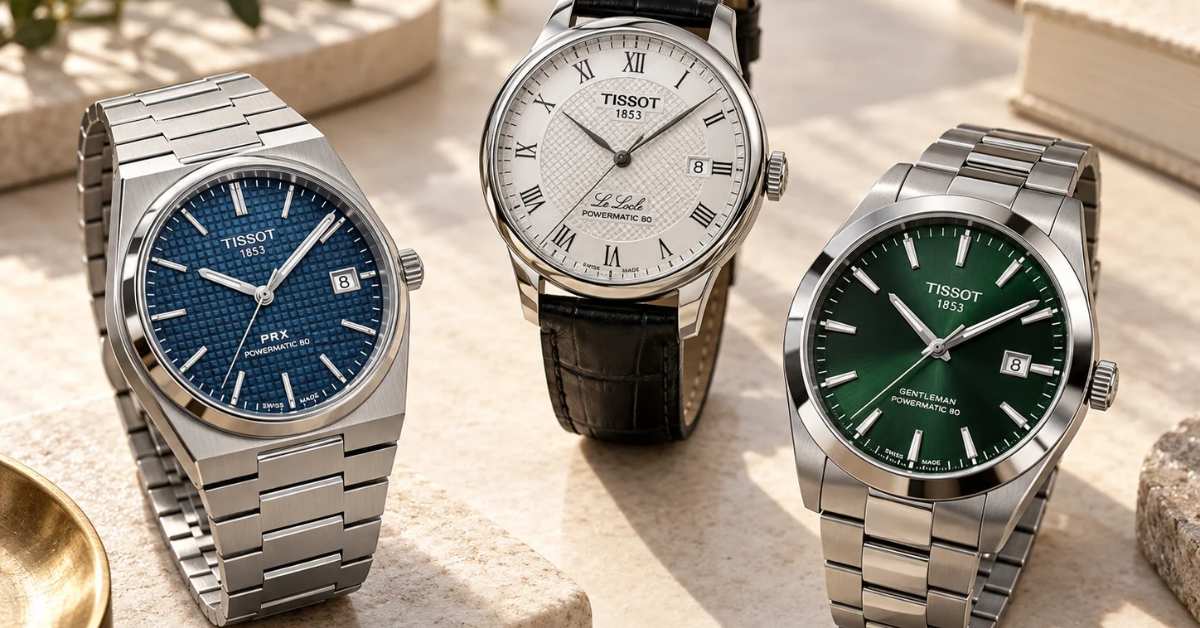
Our Gentleman Powermatic 80 review points to tracked resale data showing mid-tier Powermatic 80 variants — black, blue, and silver dial references in particular — retaining 85% to 95% of retail value, with some special-dial versions like Ice Blue and Open Heart occasionally matching or slightly exceeding retail when sold complete with box and papers. That's a dramatically different outcome from the PRX Quartz sitting just a few price tiers away.
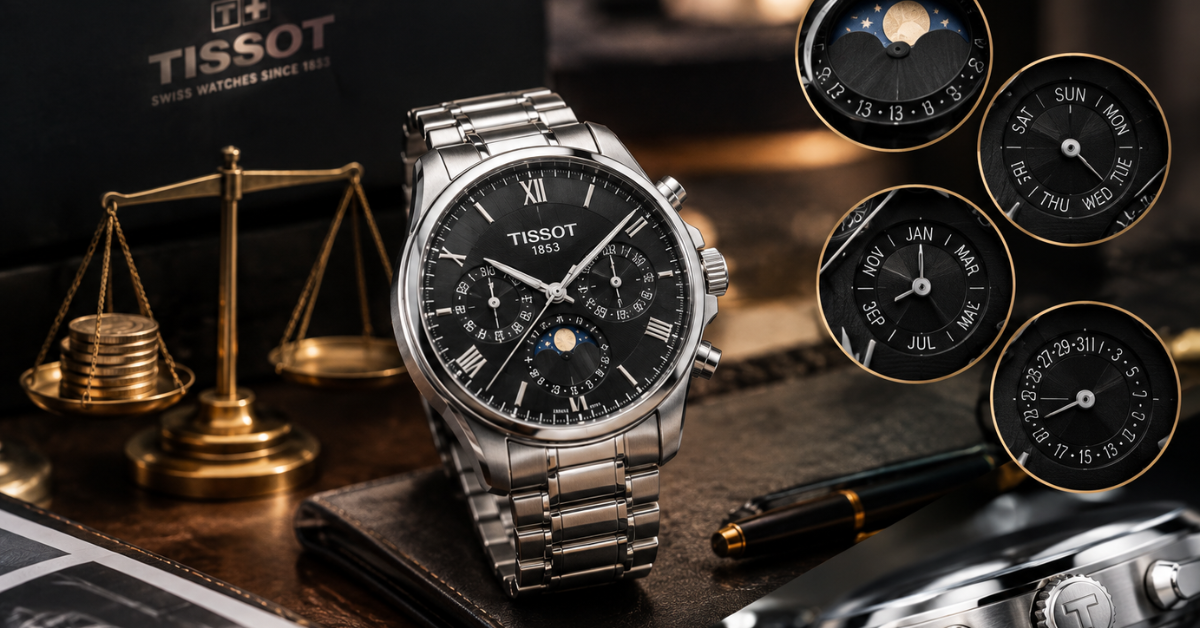
The single strongest performer, though, sits outside Tissot's mainstream lineup entirely. Our coverage of the T-Complication found that the Squelette specifically has tracked up roughly 12.1% in market price over five years — during a stretch when Tissot's own broader collection index declined 2.4% and the overall watch market declined 2.5%. That's not a small divergence. It's a watch moving in the opposite direction from both its own brand and the wider market simultaneously, backed by a median time-to-sell faster than roughly 70% of comparably tracked watches.
Why the Gap Exists
The pattern isn't random once you look at what separates the winners from the decliners. The PRX Quartz depreciates hard specifically because it's mass-produced, widely available, and easy to replace new at any time — there's no reason for a buyer to pay a premium for a used one. The T-Complication Squelette, by contrast, is a genuine mechanical showcase built around a respected hand-wound movement architecture, sold in far lower volume to a buyer specifically seeking that kind of piece rather than a general-purpose daily watch. Scarcity and genuine collector appeal, not brand name alone, are doing the real work here.
The Gentleman Powermatic 80's strong retention sits somewhere in between — a genuinely well-regarded, versatile watch that's earned real word-of-mouth reputation without being mass-marketed the way the PRX has been, giving it demand that outpaces its supply on the secondary market more consistently than most of Tissot's catalog.
What This Actually Means for Buyers
If resale value is genuinely your priority, the data points to a clear strategy: look toward Powermatic 80 references with strong tracked retention, or genuinely distinctive pieces like the T-Complication, rather than assuming any Tissot purchase behaves the same way. Our Tissot Price Guide is worth checking before you buy specifically with resale in mind, since price tier alone doesn't predict which references will hold value.
If you're buying to wear rather than to eventually sell, none of this should change your decision much — a watch that depreciates is only a "loss" if you were planning to sell it, and Tissot's engineering and finishing quality don't change based on what a resale tracker says about it. In fact, the PRX Quartz's steep depreciation curve is genuinely good news if you're shopping pre-owned: buying one used at a discount means someone else already absorbed that loss, and you get essentially the same watch for meaningfully less.
The Honest Bottom Line
Tissot as a brand is not built for appreciation, and treating any purchase there as a financial play is the wrong lens for the overwhelming majority of its catalog. But "the data" the title promises isn't uniform, and pretending otherwise would be dishonest — specific references, particularly certain Powermatic 80 variants and the T-Complication Squelette, have genuinely outperformed both their own brand's average and the broader watch market. Know which category your specific watch falls into before assuming either story applies to it.
FAQ
Do Tissot watches hold their value? Generally no — most Tissot references depreciate meaningfully on the secondary market, though specific models, particularly certain Powermatic 80 variants and the T-Complication Squelette, have shown genuine resale strength.
Which Tissot watch depreciates the fastest? The PRX Quartz, commonly losing more than 50% of its retail value, the steepest depreciation tracked across Tissot's current lineup.
Is the Tissot T-Complication a good investment? Among Tissot's catalog, it's the clearest exception — tracked data shows it up roughly 12.1% over five years while Tissot's own collection index and the broader watch market both declined over the same period.
Should I buy a Tissot if I care about resale value? Look specifically at well-regarded Powermatic 80 references and genuinely distinctive pieces rather than assuming any Tissot purchase performs the same on resale.
Is it smarter to buy a depreciating Tissot new or used? Used, generally — since most of the depreciation happens early, buying pre-owned lets you get the same watch for meaningfully less once the first owner has already absorbed that loss.
Conclusion
The honest data says Tissot isn't an investment brand, and it was never trying to be one. What the data also says, more usefully, is that a handful of specific references genuinely buck that trend — not because of hype, but because of real scarcity and collector interest working in their favor. Buy a Tissot because you want to wear it. If a small part of you also wants it to hold its value, now you know exactly which ones actually do.
Senior Writer
James Whitfield
Senior watch writer with a decade covering Swiss horology, vintage markets and modern releases.