On this page
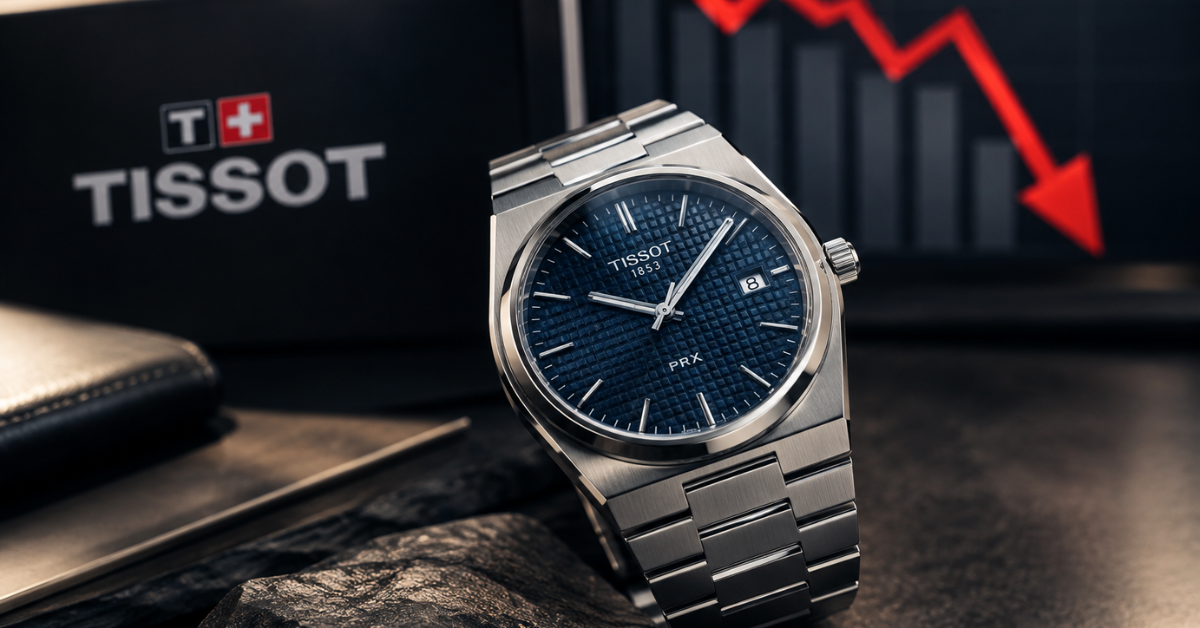
The Tissot PRX Quartz currently shows the steepest depreciation in Tissot's lineup, losing more than 50% of its retail value on the secondary market according to 2026 tracking data — worse than the PRX Powermatic 80 automatic version of the same watch, which loses roughly 45%. Gray-market PRX Quartz pricing has been observed as low as $213 to $227 against a $375 to $425 retail price. This is a resale-performance finding specifically, not a verdict on the watch's design or build quality — the PRX remains one of Tissot's most genuinely well-regarded models to actually own and wear.
Depreciation and desirability aren't the same measurement, and this article is specifically about the first one. If you're deciding whether to buy a PRX because you love how it looks and wears, that's a separate, entirely valid question our other coverage addresses directly. This is about what actually happens to that watch's resale value once it leaves an authorized dealer — and the honest answer, based on current tracking data, points squarely at one specific version of one specific collection.
The Finding: PRX Quartz Depreciates Fastest
According to secondary-market tracking published in 2026, the PRX Quartz shows the worst value retention anywhere in Tissot's current lineup, commonly losing more than 50% of its retail price once resold. That's worse than the automatic PRX Powermatic 80 — built around the same case and bracelet design — which still depreciates meaningfully but generally settles closer to a 45% loss from retail. Gray-market and lightly-used PRX Quartz listings have been observed in the $213 to $227 range, against a retail price generally sitting at $375 to $425.
Worth noting for context: broad tracking data (WatchCharts) puts the average Tissot watch price at roughly $400 across the entire brand — and the PRX collection's average sits at essentially the same figure. Despite being Tissot's most talked-about and design-forward current watch, it commands no real premium even within Tissot's own catalog, which helps explain why it doesn't hold a premium on resale either.
Why the PRX Quartz Specifically Depreciates This Fast
A few factors compound here, and understanding them explains the gap between the quartz and automatic versions specifically, not just the PRX generally.
Volume and availability work against it. The PRX Quartz is produced and sold widely, with no meaningful allocation scarcity at authorized dealers. A buyer shopping the secondary market can typically find a brand-new equivalent without waiting, which removes any urgency premium that drives resale value up on genuinely hard-to-get watches.
It's directly competing with its own new-retail price. Because the PRX Quartz isn't expensive to begin with, a buyer choosing between a used one and simply ordering new has less financial incentive to accept a used watch's condition uncertainty for a relatively small discount — until that discount becomes steep enough to matter, which is exactly what's happened.
The automatic version holds a genuine, measurable edge. The Powermatic 80's more substantial movement, exhibition caseback, and roughly $300 higher retail price all give it more room to depreciate proportionally while still landing at a more defensible absolute resale price than the quartz version's already-modest starting point. Our PRX vs PRX Powermatic 80 comparison covers what that roughly $300 gap actually buys at retail, useful context for understanding why the resale gap tracks similarly.
This Doesn't Mean the PRX Is a Bad Watch
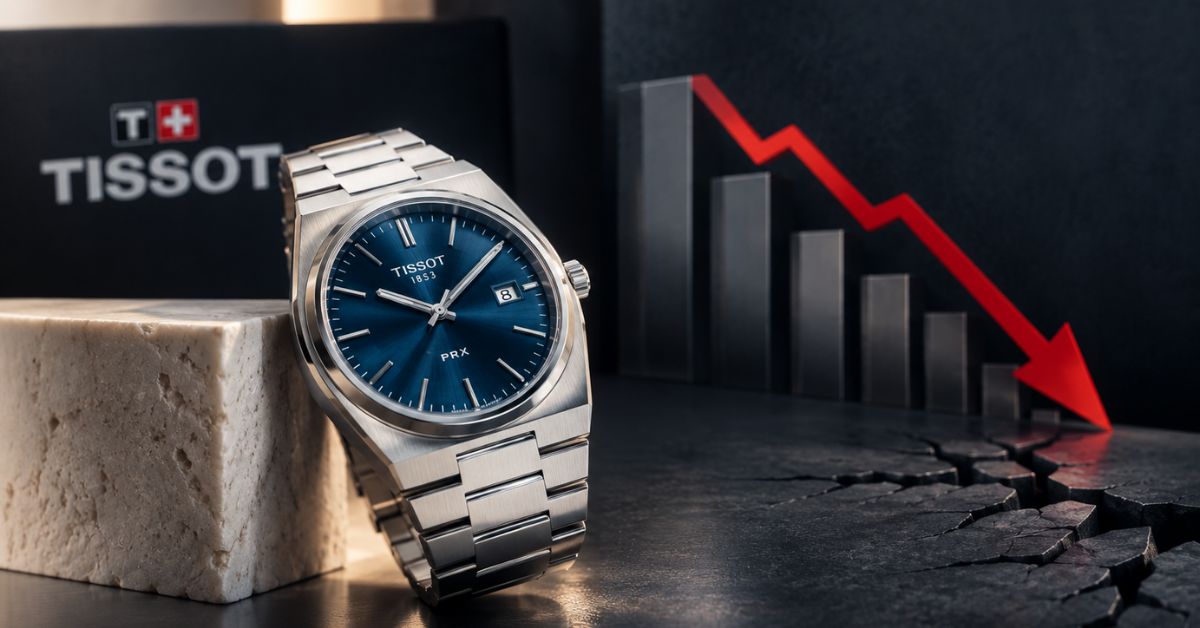
Worth being direct about this, because depreciation and quality are genuinely separate questions that get conflated constantly. The PRX Quartz's resale performance says nothing about its build, its accuracy, or whether it's worth owning — it says something specific about supply, demand, and how the secondary market currently prices it relative to new. Plenty of genuinely excellent watches, across many brands, depreciate hard simply because they're well-made, widely available, and not artificially scarce. Our Best Tissot Watches Under $500 guide covers exactly why the PRX Quartz earns its place as a genuine recommendation to buy and wear — that assessment and this one aren't in conflict; they're answering different questions.
What Holds Value Better Within Tissot's Own Catalog
For useful contrast, the Tissot Gentleman performs considerably better on this specific measure. Entry-level quartz Gentleman references depreciate a more modest 15% to 20%, while mid-tier Powermatic 80 variants — including black, blue, and silver dial versions — have been tracked retaining 85% to 95% of retail value, with some special-dial references like Ice Blue and Open Heart occasionally matching or slightly exceeding retail when sold complete with box and papers. Our Gentleman Powermatic 80 review covers what makes that watch a genuinely stronger resale performer, alongside its daily-wear case for versatility over the PRX's more design-forward identity.
What This Actually Means If You're Buying
If resale value genuinely factors into your decision, the practical takeaway isn't "avoid the PRX Quartz" — it's closer to the opposite. Since the depreciation has effectively already happened by the time a watch hits the secondary market, buying a lightly-used PRX Quartz at $213 to $227 instead of paying $375 to $425 retail means someone else absorbed that loss, not you. That's a genuinely smart way to own the watch if the design is what draws you to it and you're not particularly attached to having the newest example.
If you're buying new specifically and plan to keep the watch rather than resell it, none of this should meaningfully change your decision — depreciation only matters at the point of sale, and a watch you're wearing rather than trading holds exactly the value it provides you day to day, regardless of what a tracking chart says about it.
Buying With Confidence
If you're specifically shopping the secondary market to take advantage of this gap, authentication matters more, not less, given how recognizable and frequently counterfeited the PRX has become at this exact price point. Our guide on authenticating a Tissot against "Swiss Made" fakes covers what to check before any pre-owned purchase.
FAQ
Which Tissot watch loses value the fastest? The PRX Quartz currently shows the steepest depreciation in Tissot's lineup, commonly losing more than 50% of its retail value on the secondary market.
Does the PRX Powermatic 80 depreciate as fast as the Quartz version? No — it depreciates less severely, generally around 45% from retail, compared to the Quartz version's 50%-plus loss.
Is fast depreciation a sign the PRX is a bad watch? No — depreciation reflects supply, demand, and secondary-market pricing dynamics, not build quality or design merit; the PRX remains a genuinely well-regarded watch to own and wear.
Which Tissot models hold their value better than the PRX? The Tissot Gentleman performs considerably better, with mid-tier Powermatic 80 variants tracked retaining 85% to 95% of retail value.
Should I buy a PRX Quartz new or used if resale matters to me? Buying lightly used is the more financially sensible choice if resale value is a genuine priority, since the steepest depreciation has typically already occurred by the time a watch reaches the secondary market.
Conclusion
The PRX Quartz's resale numbers are genuinely the weakest in Tissot's current lineup — that's a real, tracked finding, not speculation. But it's a finding about market dynamics, not about the watch itself, and it says more about how accessible and widely available a genuinely well-made watch has become than it does about anything wrong with it. Buy it new because you love how it looks and wears, or buy it used because someone else already absorbed the depreciation — either way, the watch underneath doesn't change.
Editor-in-Chief
Editorial Team
The TissotWatches.blog editorial desk — independent watch journalism, reviews and buying advice.