On this page
- The Watch That Fixed the Gentleman's Only Problem
- Tissot Gentleman 38mm at a Glance
- What's New Compared to the 40mm Gentleman
- The Movement: Why the Powermatic 80 Matters
- How the Gentleman 38mm Wears
- The "Baby Rolex" Question
- Gentleman 38mm vs the Other Swiss Watches Under $1,000
- Tissot Gentleman 38mm vs Tissot Visodate 39mm
- Tissot Gentleman 38mm vs Tissot PRX Powermatic 80
- Tissot Gentleman 38mm vs Tissot PR516 38mm
- Tissot Gentleman 38mm vs Hamilton
- So, Is It the Best Swiss Watch Under $1,000?
- What We'd Change
- Buying Tips
- Frequently Asked Questions
- How much is the Tissot Gentleman 38mm?
- Is the Tissot Gentleman 38mm automatic?
- What's the difference between the Tissot Gentleman 38mm and 40mm?
- Is the Tissot Gentleman 38mm too small for men?
- Is the Tissot Gentleman waterproof?
- Is the Tissot Gentleman a good first watch?
- The Bottom Line
The Watch That Fixed the Gentleman's Only Problem
The Tissot Gentleman has been a quiet bestseller for years. It looks expensive, wears easily and costs a fraction of the luxury watches it gets compared to. But there was always one complaint: at 40mm with long lugs, it wore a little big for a dress-leaning everyday watch.
In March 2026, Tissot fixed that. The new Tissot Gentleman 38mm shrinks the case, cleans up the dial and keeps the same sub-$1,000 price. Reviewers immediately started calling it the best gateway watch on the market.
That's a bold claim. So let's test it properly: what you get, how it wears, where it falls short, and how it stacks up against the other Swiss watches you could buy for under $1,000.
Tissot Gentleman 38mm at a Glance
- Price: $850 in the US (CHF 695 in Switzerland)
- Case: 38mm 316L stainless steel, about 11.53mm thick
- Lug-to-lug: 45.7mm
- Lug width: 18mm
- Movement: Tissot Powermatic 80 automatic, with Nivachron hairspring
- Power reserve: 80 hours
- Crystal: domed sapphire, with a display caseback
- Water resistance: 100m
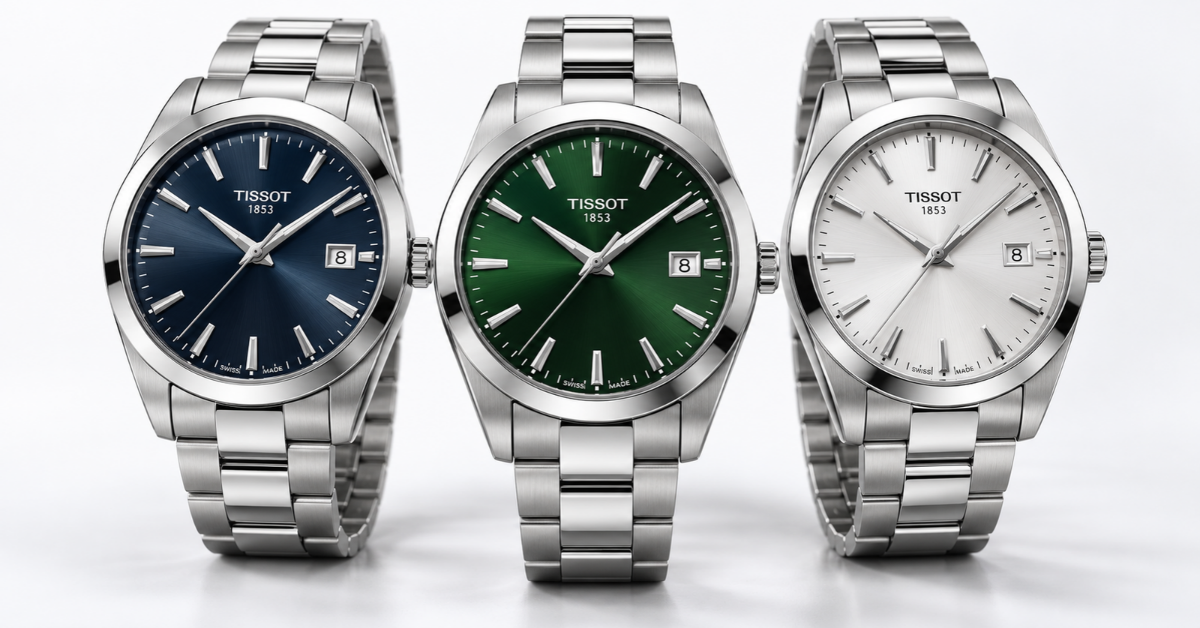
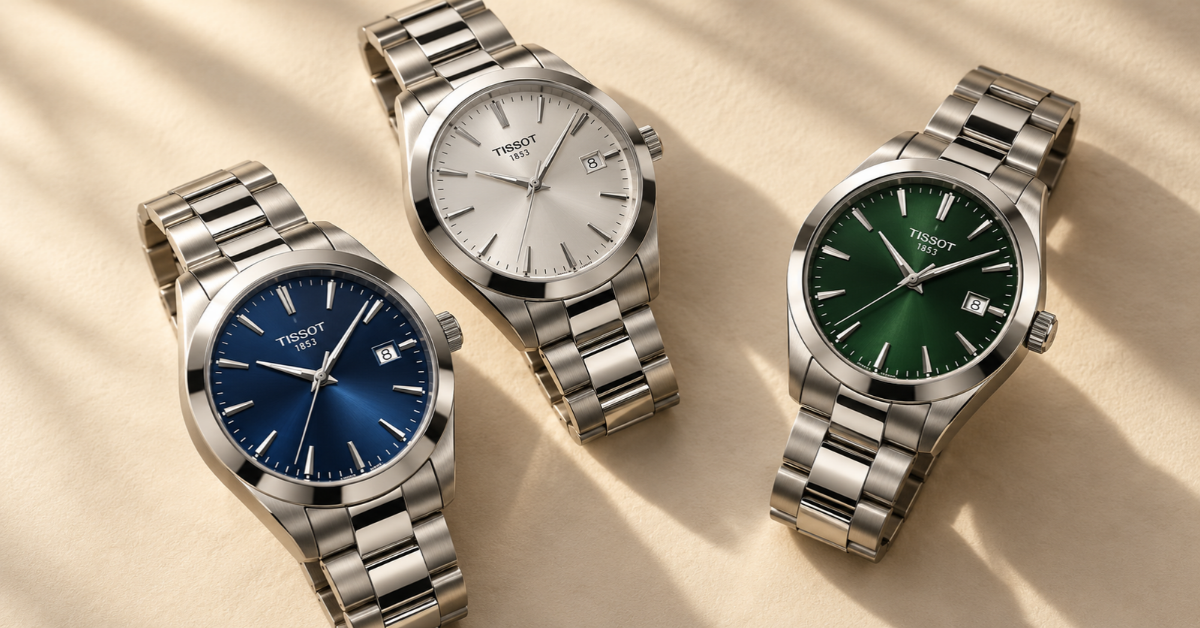
- Dials: pyramidal sunburst in silver, blue, black or green
- Launched: March 31, 2026
What's New Compared to the 40mm Gentleman
The 38mm isn't just a shrunk-down copy. Tissot changed a few things that make it a better everyday watch.
- Smaller footprint. The case drops from 40mm to 38mm, and lug-to-lug shrinks from 48mm to 45.7mm. That second number matters most. It's what decides whether a watch overhangs your wrist.
- A cleaner dial. The 40mm's crosshair pattern is gone. In its place is a new pyramidal sunburst finish that plays with light in a more subtle way.
- Narrower lugs. Lug width goes from an awkward 21mm to a standard 18mm, so finding aftermarket straps is suddenly easy.
- A different hairspring. The 40mm Silicium version uses a silicon balance spring. The 38mm uses a Nivachron hairspring, which is also highly resistant to magnetism and temperature changes.
Thickness barely changes, so the 38mm keeps the same slightly chunky profile. More on that below. If you're curious how the original compares day to day, see our full Tissot Gentleman Powermatic 80 review.
The Movement: Why the Powermatic 80 Matters
The heart of the Gentleman 38mm is the same movement that made the PRX a hit: the Powermatic 80. It's based on the proven ETA 2824 architecture but heavily upgraded.
- 80-hour power reserve. Take it off on Friday evening and it'll still be running on Monday morning. Most watches at this price stop after about 38 to 42 hours.
- Nivachron hairspring. This alloy, developed within the Swatch Group, resists magnetism far better than a standard hairspring. That's useful in a world full of phones, laptops and magnetic bag clasps.
- Hacking seconds and hand-winding for precise setting.
There's one honest trade-off. To reach 80 hours, Tissot slowed the beat rate to 21,600 vibrations per hour. That makes the seconds hand sweep slightly less smoothly than older 28,800vph movements. Most owners never notice. For the full picture of Tissot's movement options, read Tissot movements explained: ETA vs Swissmatic vs Powermatic 80.
How the Gentleman 38mm Wears
This is where the 38mm earns its reputation. Reviewers with 7-inch wrists describe it as perfectly balanced, and one tester on an 18cm (about 7.1-inch) wrist said it wears so well he'd have believed it was 10mm thick.
That's because the case is shaped like a smooth pebble. The polished, sloped bezel and the curved case sides make it melt into the wrist, and the shorter lugs mean it hugs smaller wrists instead of sitting on top of them.
A rough sizing guide:
- Under 6.5 inches: the 38mm is a clear win over the 40mm
- 6.5 to 7.25 inches: the 38mm sits in its sweet spot
- Over 7.25 inches: it will look classic and slightly vintage; some may prefer the 40mm
The one thing to know is the height. At around 11.5mm to 12mm, it's not a wafer-thin dress watch. It slides under most shirt cuffs, but it isn't designed for the tightest French cuffs. That's the price of a robust automatic movement and 100m of water resistance.
The "Baby Rolex" Question
Let's address it. Many people buy the Gentleman because it shares the general look of a certain crown-branded Datejust-style watch: polished bezel, sunburst dial, applied markers, date window.
That comparison is fair as far as looks go, and at 38mm the resemblance is even closer to the classic proportions. But the Gentleman stands on its own. It's an honest, well-made Swiss watch from a brand with a long history, not a copy. If you want to know where Tissot sits in the bigger picture, see is Tissot still considered a luxury brand.
Gentleman 38mm vs the Other Swiss Watches Under $1,000
Calling something "the best" means beating the competition. Here's how it compares with the most common alternatives.
Tissot Gentleman 38mm vs Tissot Visodate 39mm
The redesigned Visodate is the Gentleman's biggest rival, and it's also new for 2026. It's a 39mm, 1950s-inspired dress watch with the same 80-hour Powermatic 80, priced at $850 on leather or $950 on a beads-of-rice bracelet.
Pick the Visodate if you love mid-century style, Dauphine hands and a softer, more vintage feel. Pick the Gentleman if you want a more versatile watch that works with a suit, jeans or gym clothes.
Tissot Gentleman 38mm vs Tissot PRX Powermatic 80
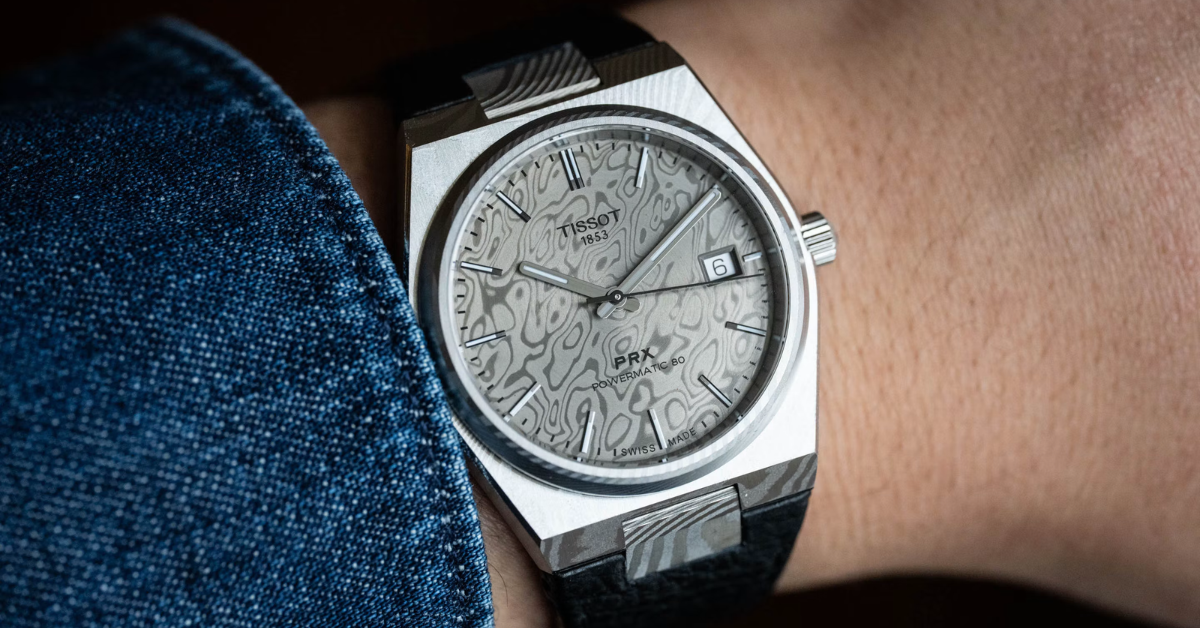
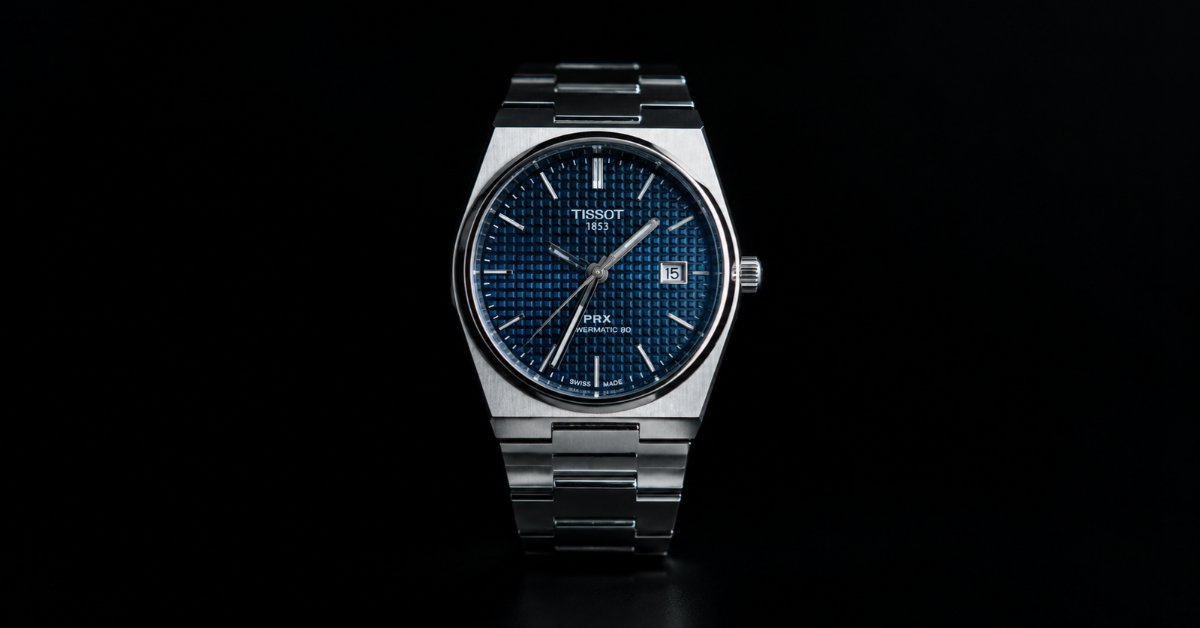
The PRX is Tissot's other superstar, with a 1970s integrated-bracelet design and the same movement. It's more of a statement watch, with a sharp, angular case.
Pick the PRX if you love the integrated sports-watch look. Pick the Gentleman if you want something softer, dressier and easier to wear every day. Not sure which PRX size would suit you? Read what size Tissot PRX you should actually buy.
Tissot Gentleman 38mm vs Tissot PR516 38mm
The PR516 Powermatic 80 is a 38mm racing-inspired watch with a fixed 60-minute bezel, at $825. It's a great sporty alternative but less dressy than the Gentleman.
Tissot Gentleman 38mm vs Hamilton
Hamilton, Tissot's Swatch Group sibling, makes excellent field and dress watches around the same price, often using related movements. The choice is mostly about style: Hamilton leans American military heritage, Tissot leans Swiss elegance. Our Tissot vs Hamilton comparison covers it in depth.
So, Is It the Best Swiss Watch Under $1,000?
For the buyer who wants one watch to wear every day, yes, we think it is.
No other Swiss watch at $850 combines all of this in one package: an 80-hour automatic movement with anti-magnetic protection, sapphire on both sides, 100m water resistance, a versatile design that works anywhere, and now a size that fits most wrists properly.
But "best" depends on what you value:
- Best all-rounder: Tissot Gentleman 38mm
- Best vintage dress watch: Tissot Visodate 39mm
- Best statement sports watch: Tissot PRX Powermatic 80
- Best sporty-racing look: Tissot PR516 38mm
If this is your first proper watch, the Gentleman is an especially smart start. Here's why so many people start with Tissot for their first automatic.
What We'd Change
No watch is perfect, and honest reviews should say so.
- Thickness: around 11.5mm to 12mm is fine, but a slimmer case would make it an even better dress watch.
- Beat rate: the 21,600vph movement is a small step down in smoothness from older 28,800vph designs.
- Resale: like most Tissots, it will lose value if you sell it. Our look at whether a Tissot is a good investment explains why. Buy it to wear, not to flip.
Buying Tips
The Gentleman's popularity makes it a target for fakes, and a new 38mm version is no exception. Buy from Tissot directly or an authorised retailer. If you're buying from a private seller, read 5 ways to spot a fake Tissot Gentleman first, and once it arrives, run through how to verify your Tissot is genuine.
Frequently Asked Questions
How much is the Tissot Gentleman 38mm?
The Tissot Gentleman 38mm costs $850 in the US and CHF 695 in Switzerland. It's available from Tissot and authorised retailers in silver, blue, black and green dial options.
Is the Tissot Gentleman 38mm automatic?
Yes. It uses Tissot's Powermatic 80 automatic movement, with an 80-hour power reserve, hacking seconds, hand-winding and an anti-magnetic Nivachron hairspring.
What's the difference between the Tissot Gentleman 38mm and 40mm?
The 38mm has a smaller case, a shorter 45.7mm lug-to-lug (vs 48mm), an 18mm lug width (vs 21mm), a new pyramidal sunburst dial without the crosshair, and a Nivachron hairspring instead of the 40mm Silicium's silicon balance spring.
Is the Tissot Gentleman 38mm too small for men?
No. 38mm is a classic size for men's watches, and the Gentleman's case shape makes it wear comfortably on wrists from about 6 to 7.25 inches. On larger wrists, it looks classic rather than small.
Is the Tissot Gentleman waterproof?
The Tissot Gentleman 38mm is water-resistant to 100m. That's enough for swimming and everyday splashes, though it isn't designed as a dive watch.
Is the Tissot Gentleman a good first watch?
Yes. It's one of the best first Swiss automatic watches you can buy, thanks to its 80-hour power reserve, versatile design, durable build and $850 price.
The Bottom Line
The Gentleman was already one of the smartest Swiss watches under $1,000. At 38mm, it finally fits the way it always should have.
If you want one watch that looks great with everything, runs all weekend on the nightstand and won't empty your bank account, this is the one we'd point you to first.
Senior Writer
James Whitfield
Senior watch writer with a decade covering Swiss horology, vintage markets and modern releases.