On this page
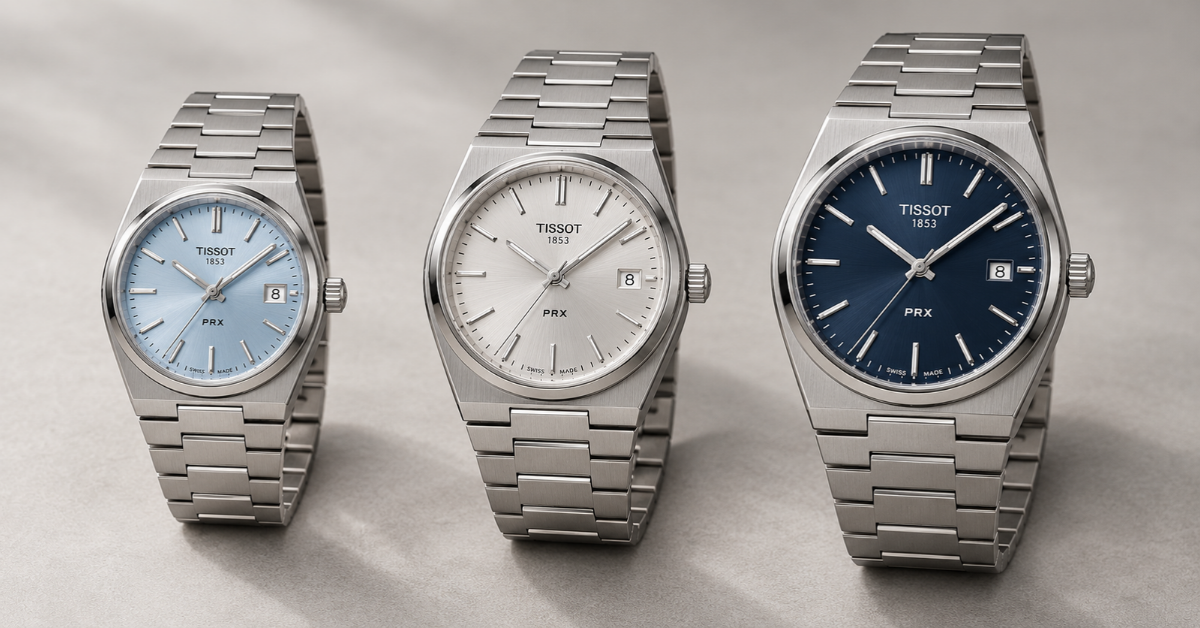
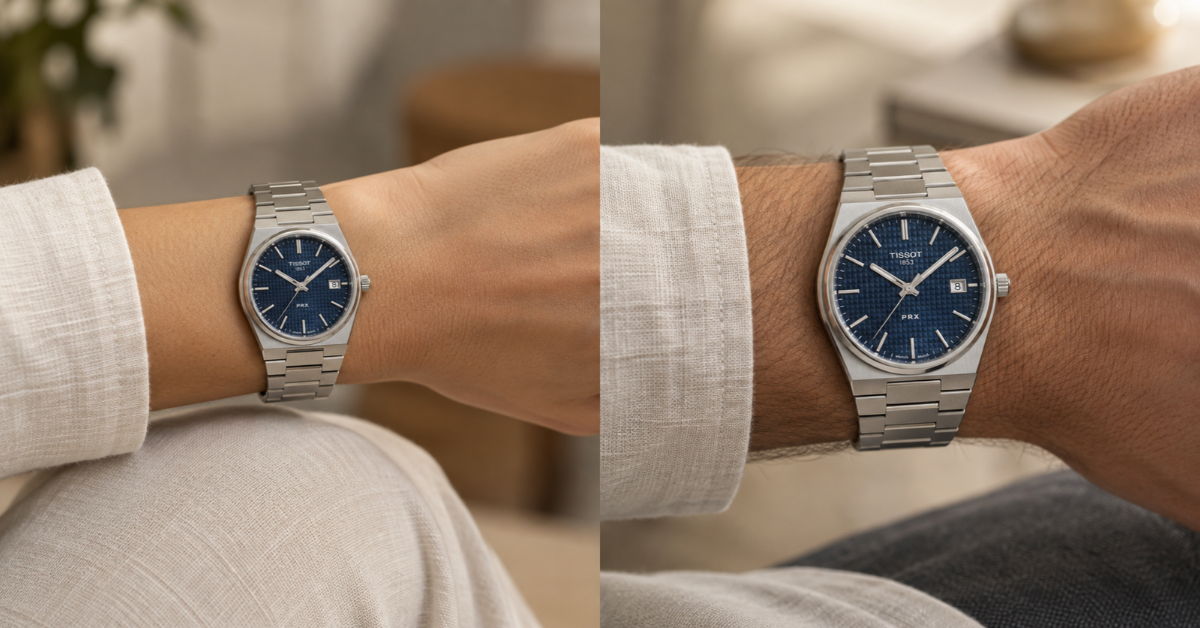
Here's the detail that trips up more PRX buyers than anything else about the watch: the number on the spec sheet isn't the number on your wrist. Tissot lists the 40mm PRX with a 44.6mm lug-to-lug, a figure that sounds entirely reasonable for a 40mm watch — until you realize that number doesn't include the first bracelet link, which on a PRX is fixed in place rather than articulating like a normal link. Once you measure the watch as it's actually worn, that 40mm reference grows to roughly 51.5mm, a case that behaves more like a 46 or 47mm conventional watch than its diameter suggests.
That single gap between stated and effective sizing is the reason this guide exists.
Why the PRX Wears Bigger Than Its Spec Sheet Says
The PRX's signature integrated-bracelet design, which flows directly from the case with no visible gap, is exactly what creates this discrepancy. A conventional watch has lugs, then a separate bracelet attached to them — the lug-to-lug measurement genuinely represents the case, full stop. The PRX has no conventional lugs at all. Its first bracelet link is effectively part of the case structure, fixed rather than hinged, which means the true visual and physical footprint on your wrist extends well past the number Tissot prints in its own specifications.
This isn't a flaw — it's a direct consequence of the exact design feature that makes the PRX distinctive in the first place. But it does mean shopping by diameter alone is a genuine mistake with this specific watch, more so than with most others.
Real Measurements, By Size
35mm carries a stated lug-to-lug around 38.5 to 39mm, but an effective wearing length closer to 44.9mm once that fixed first link is accounted for. Thickness runs 10.4mm on the quartz version and 11.3mm on the Powermatic 80 automatic.
38mm, the newer size introduced in premium materials like titanium and Damascus steel, sits in between — effective lug-to-lug varies by specific reference, generally somewhere in the low-to-mid 40s depending on the exact bracelet construction used for that material.
40mm carries the widest gap between stated and real: a 44.6mm official figure that becomes roughly 51.5mm in practice. Thickness runs 10.9mm quartz and 11.3 to 11.7mm on the Powermatic 80. If you're weighing the thickness difference between movements specifically, our PRX vs PRX Powermatic 80 comparison covers that trade-off directly.
A Practical Wrist-Size Guide
Use these as a genuine starting point, measured with a soft tape around your wrist bone, not a guess:
- Below 6.25 inches (15.9cm): The 35mm is almost always the better call. A 40mm here, with its effective 51.5mm reach, will overhang visibly.
- 6.25 to 6.75 inches (15.9–17cm): The 35mm remains the safer default, though a flat or broad wrist in this range can sometimes carry the 38mm comfortably.
- 6.75 to 7.25 inches (17–18.4cm): This is genuinely the PRX's most contested territory, and where the 38mm earns its keep — a real middle ground for wrists that find the 35mm a touch small and the 40mm a touch much.
- Above 7.25 inches (18.4cm): The 40mm wears proportionally here, and its bolder wrist presence stops working against you once your wrist has the real estate to support it.
Flat Wrists Carry More Than Round Ones
One genuinely useful nuance worth knowing: wrist shape matters almost as much as circumference. A flat, broad wrist at 16.5cm can often carry the 40mm more comfortably than a round, narrow wrist measuring a full centimeter larger, because a flatter wrist surface supports a longer lug-to-lug span without the case visibly curving off the edges. If you're on the fence between two sizes based on circumference alone, factor in whether your wrist tends to look flatter or more rounded in profile — it genuinely changes the calculation.
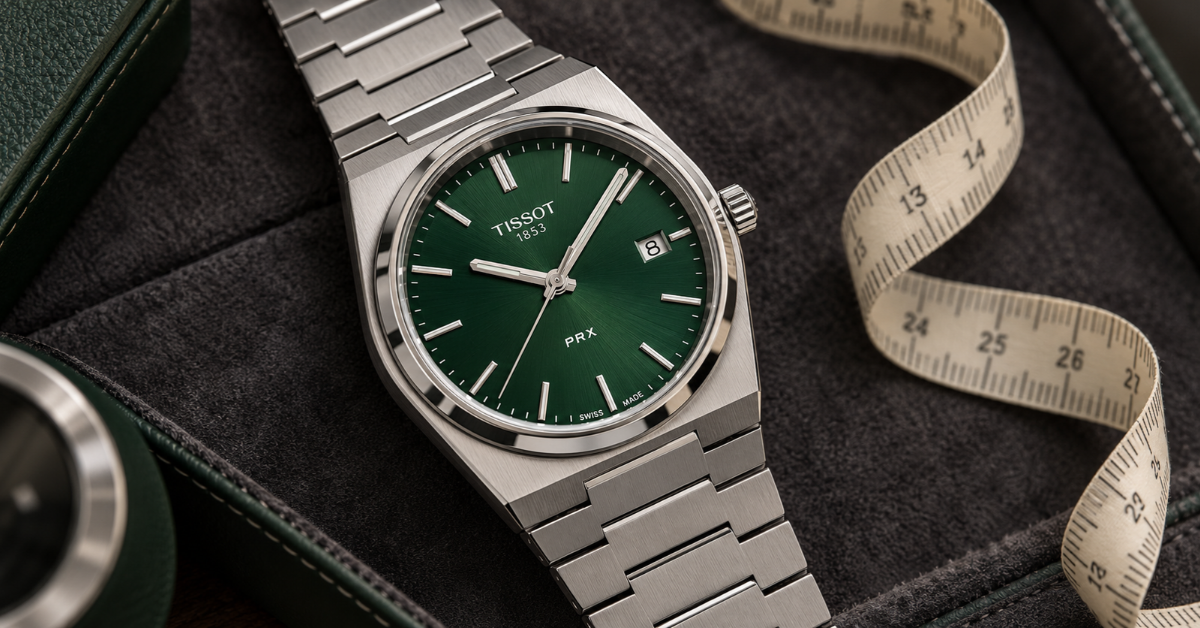
Why This Matters More With the PRX Than Most Watches
The integrated bracelet that makes the PRX wear longer than its spec sheet also means you can't simply swap to a different strap to shrink the effective footprint the way you could with a conventional lugged watch — the case and bracelet are a single visual unit by design. Getting the size right at the point of purchase matters more here than it does with most other collections, including elsewhere in Tissot's own catalog. Our PRX complete guide covers the collection's full history and design philosophy if you want the fuller picture before deciding which reference to pursue.
The Practical Takeaway
Measure your wrist circumference before you shop, not after you've already fallen for a specific dial color. If you're between sizes and can get to a boutique or authorized retailer in person, try both — the gap between the PRX's stated and effective lug-to-lug is large enough that photos and spec sheets alone genuinely won't tell you how it sits on your own wrist.
FAQ
Why does the Tissot PRX wear bigger than its listed size? Its integrated bracelet's first link is fixed rather than articulating, which isn't included in the official lug-to-lug measurement, so the watch's real wearing length is meaningfully longer than the stated figure.
What's the real lug-to-lug on the 40mm PRX? Roughly 51.5mm in practice, compared to the 44.6mm Tissot states officially, once the fixed first bracelet link is accounted for.
What wrist size is best for the 35mm PRX? Generally under 6.75 inches (17cm), where its effective 44.9mm lug-to-lug sits comfortably without overhanging.
Is the 38mm PRX a good compromise size? Yes — it's specifically positioned for wrists in the 6.75 to 7.25 inch range that find the 35mm too compact and the 40mm too large.
Can a flat wrist carry a bigger PRX than a round wrist of the same size? Yes — a flatter wrist profile supports a longer lug-to-lug span more comfortably than a rounder wrist of equivalent circumference.
Conclusion
The honest answer to "what size PRX should I buy" starts with a measuring tape, not a size preference. Because the PRX's integrated design means the official spec sheet quietly understates how the watch actually sits on your wrist, matching your real wrist circumference, and ideally its shape, to the effective lug-to-lug figures above is the difference between a watch that wears exactly right and one that looks like it belongs to someone else.
Senior Writer
James Whitfield
Senior watch writer with a decade covering Swiss horology, vintage markets and modern releases.