On this page
Powermatic 80 is Tissot's signature automatic watch movement, built to solve one specific everyday annoyance: most automatic watches stop running if you don't wear them for a couple of days, since they only store around 38 hours of power. Powermatic 80 extends that to roughly 80 hours — enough to sit unworn over a full weekend and still be running on Monday — by running slightly slower and more efficiently than a standard automatic movement. The trade-off is a second hand that sweeps a little less smoothly than faster movements, but the watch remains fully serviceable for decades, unlike some other budget automatic platforms.
"Powermatic 80" shows up on Tissot spec sheets constantly, but it's easy to see the name repeated without actually understanding what problem it's solving. Here's the plain version.
What an Automatic Movement Actually Is
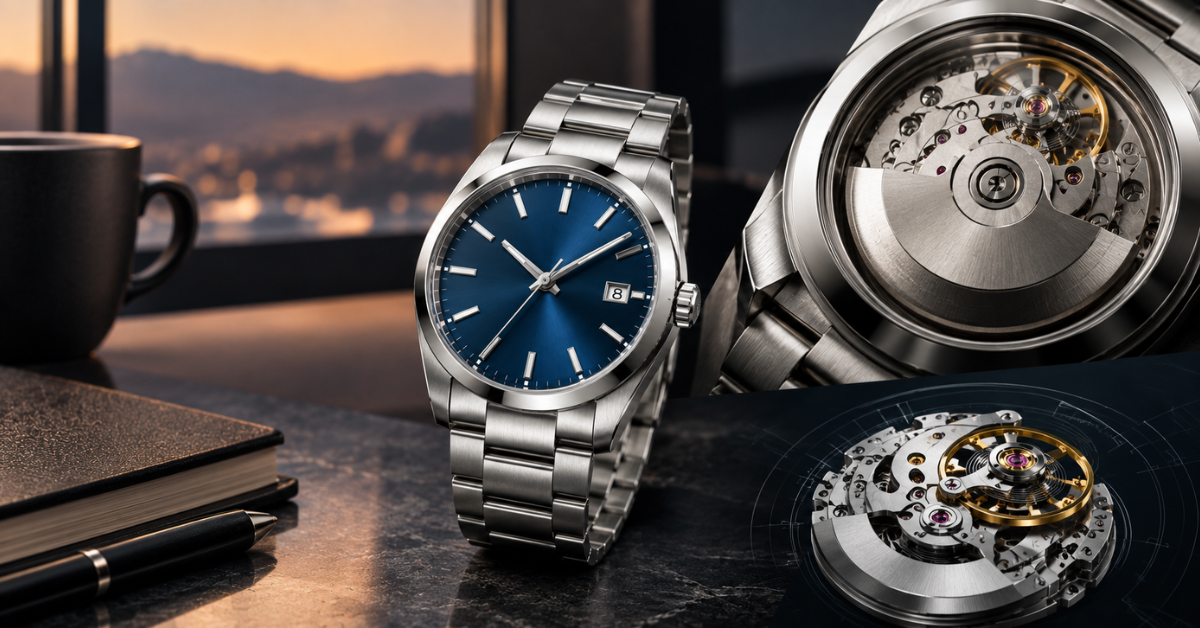
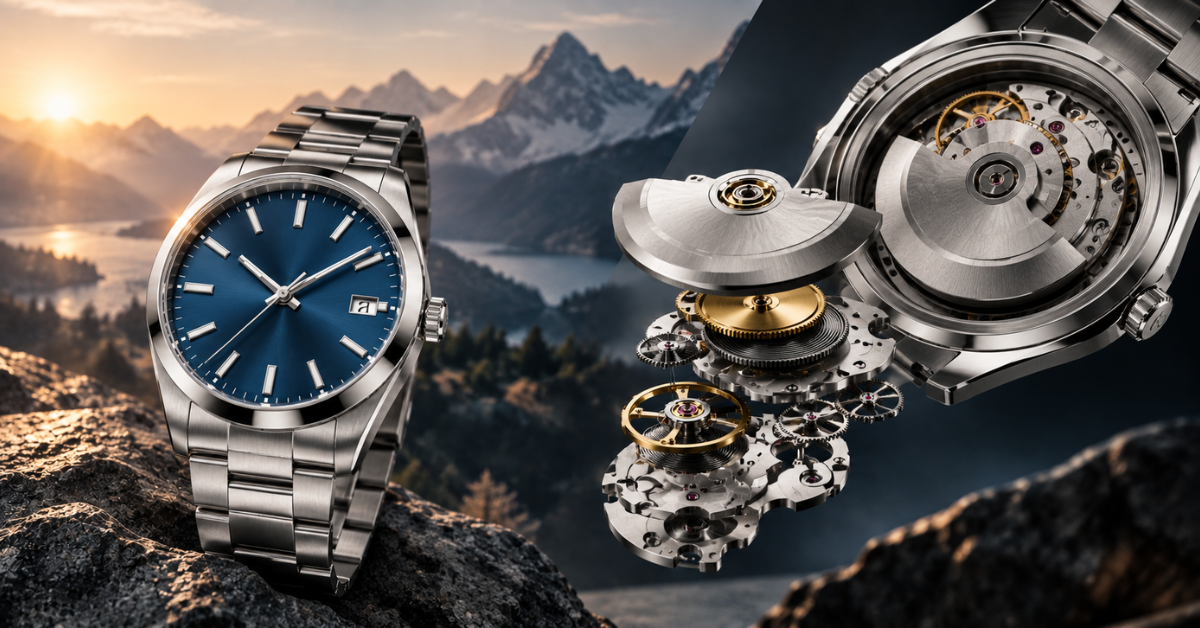
An automatic watch winds itself using the natural motion of your wrist as you wear it — a weighted rotor inside the case swings with your movement and winds the mainspring, the coiled spring that stores the watch's power. That's different from a manual watch, which you wind by hand daily, and different from a quartz watch, which runs on a battery rather than stored mechanical energy.
The Problem Powermatic 80 Actually Solves
Here's the everyday annoyance most automatic watches share: a standard automatic movement typically stores only around 38 hours of power once fully wound. Wear it every day and that's never an issue, since your wrist keeps rewinding it continuously. But set it down Friday evening and pick it back up Monday morning, and a standard automatic has usually stopped somewhere over the weekend, meaning you have to reset both the time and date before wearing it again — a small hassle, but a real one if you own more than one watch or travel without wearing the same piece daily.
How Powermatic 80 Actually Extends That
Powermatic 80 pushes that power reserve from roughly 38 hours up to about 80 hours—more than double—which is enough to sit unworn over an entire weekend and still be running, correctly set, when you pick it back up. Tissot achieves this through two changes working together: a more efficient mainspring barrel design that stores energy more effectively and a reduced movement frequency—the rate at which the internal balance wheel oscillates back and forth, which governs both timekeeping and how quickly stored energy gets used up.
The Honest Trade-Off Worth Knowing
This is worth understanding rather than glossing over, since it's a genuine trade-off, not a hidden flaw. Standard automatic movements typically run at 28,800 vibrations per hour, producing a smooth, fluid second-hand sweep. Powermatic 80 runs at a reduced 21,600 vibrations per hour to help achieve its extended power reserve, which produces a second hand that sweeps in slightly more visible, distinct steps rather than one continuous glide. It's a small visual difference, genuinely noticeable if you're used to faster-beat movements, and it's the direct mechanical cost of doubling the power reserve rather than a manufacturing shortcut. Our Tissot Movements Explained guide covers this trade-off alongside Tissot's other movement families in more technical depth, including exactly how Powermatic 80 compares to standard ETA movements and Tissot's budget Swissmatic platform.
Why It's Still a Serious Movement, Not a Shortcut
Powermatic 80 remains fully serviceable by a qualified watchmaker indefinitely, built around 23 jewels on a well-regarded ETA-derived architecture. That's worth flagging specifically because it's not true of every budget-oriented automatic platform—Tissot's own Swissmatic movement, by contrast, is a sealed, non-serviceable module meant to be replaced rather than repaired once it eventually wears out. Powermatic 80 sits in a genuinely different, more traditional serviceability category, which matters if you're thinking about a watch you'll own for decades rather than years.
Where You'll Actually Find It
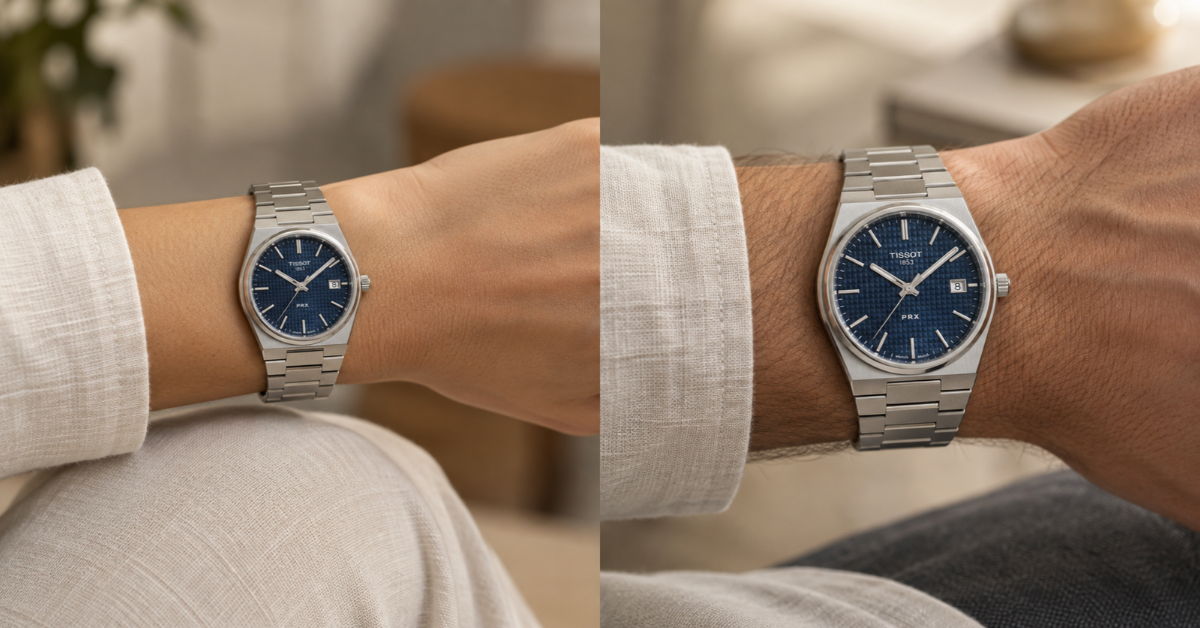
Powermatic 80 powers a wide range of current Tissot references, including the PRX Powermatic 80, the Seastar 1000, and the Gentleman Powermatic 80, among several other collections spanning dress, sport, and dive designs. It's also used across other Swatch Group brands, including Hamilton, Mido, Certina, and Rado, since it's manufactured by the same group-wide movement supplier rather than being unique to Tissot alone.
Caring for a Powermatic 80 Watch
Ownership follows the same general guidance as any serviceable Tissot automatic—periodic servicing, generally every 3 to 5 years, along with the usual care around magnets and water resistance checks. Our Tissot Maintenance Guide covers what that actually involves in more detail.
FAQ
What does "Powermatic 80" actually mean? It refers to the movement's roughly 80-hour power reserve — more than double the 38 hours typical of a standard automatic movement.
Why does a Powermatic 80 watch's second hand look different from other automatics? It runs at a reduced frequency of 21,600 vibrations per hour instead of the more common 28,800, which produces a slightly less smooth sweep in exchange for the extended power reserve.
Is Powermatic 80 the same as Tissot's Swissmatic movement? No — Powermatic 80 is fully serviceable by a watchmaker indefinitely, while Swissmatic is a sealed, non-serviceable module designed to be replaced rather than repaired.
Does Powermatic 80 ever stop if I don't wear it? Eventually, yes — but only after roughly 80 hours unworn, meaning it can sit through a full weekend and still be running, unlike most standard automatics.
Is Powermatic 80 only used in Tissot watches? No — it's manufactured for use across several Swatch Group brands, including Hamilton, Mido, Certina, and Rado, not exclusively Tissot.
Conclusion
Powermatic 80 solves a genuinely annoying, everyday problem — a watch that stops the moment you set it down for a few days — through a real, honest engineering trade-off rather than a marketing shortcut. Slightly less sweep smoothness in exchange for more than double the power reserve, all while staying fully serviceable for the long run. Once you know that trade-off exists, the name on the spec sheet actually means something specific rather than just sounding impressive.
Reviews Editor
Sofia Marchetti
Reviews editor focused on dive watches, chronographs and everyday wearability.