On this page
Tissot officially recommends a full service every 3 to 5 years depending on the model and usage conditions, an annual water resistance check for any watch regularly exposed to water, and prompt battery replacement on quartz models — signaled by the second hand jumping in 2-second intervals rather than ticking every second. Daily care is simpler: clean with a soft cloth, avoid solvents and perfumes contacting the case or bracelet, keep the watch away from strong magnets, and avoid extreme or sudden temperature changes.
Most watch maintenance advice online is either too vague to act on or borrowed from a different brand's service schedule entirely. This guide sticks to what Tissot itself actually recommends, plus the daily habits that genuinely extend a watch's life — not a generic checklist that happens to mention Tissot in the title.
How Often You Actually Need a Full Service
Tissot's own guidance, published through its official customer service channels, recommends a complete service every 3 to 5 years, depending on the specific model and how the watch is actually used. Climate and usage conditions can shorten that window — a watch worn daily in humid conditions or exposed to frequent temperature swings may need attention sooner than one worn occasionally in a stable environment.
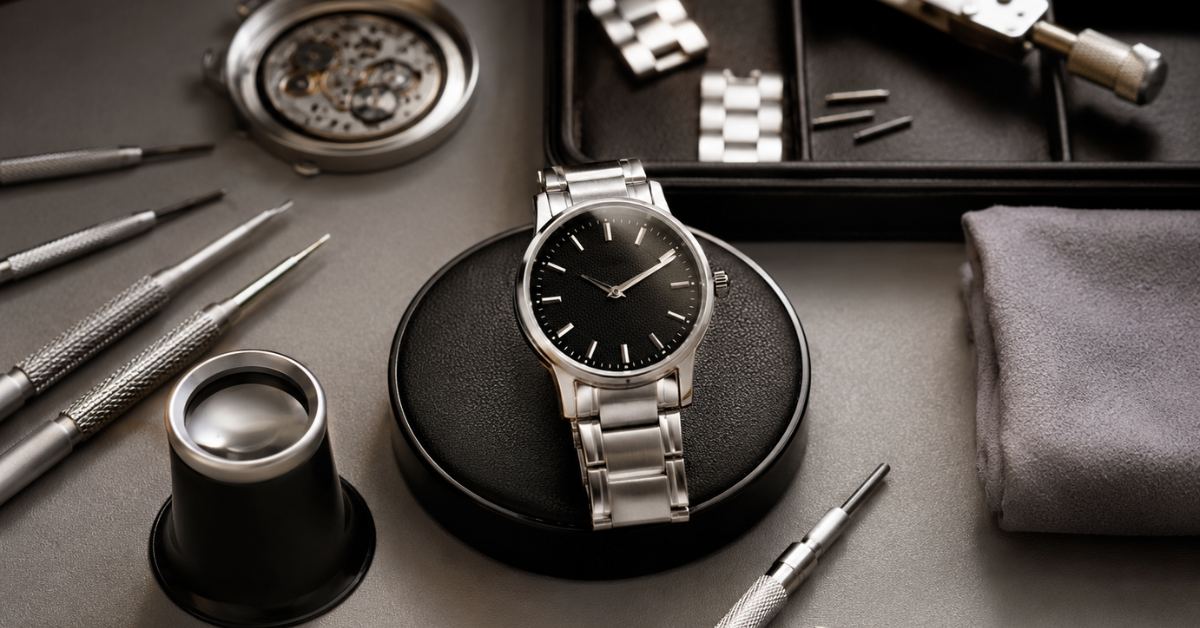
A complete service is a genuine overhaul, not a quick check: the movement is fully disassembled, ultrasonically cleaned to remove old lubricant and debris, inspected for worn components, reassembled with fresh lubrication, and tested for accuracy and power reserve. The case is broken down separately — bezel, crystal, pushers, and gaskets all removed, cleaned, and refinished before the watch is resealed and water-resistance tested. Tissot backs this service with a 2-year warranty covering both the movement work and the restored water resistance.
If you're weighing which Tissot collection to buy with long-term ownership costs in mind, our Tissot Price Guide is worth reading alongside this piece — a Powermatic 80 automatic and a quartz Everytime have genuinely different maintenance profiles, not just different upfront prices.
Quartz Batteries: What to Actually Watch For
If you own a quartz Tissot, the watch itself will tell you when the battery needs replacing. Most Tissot quartz models include an end-of-life indicator: as the battery weakens, the second hand switches from its normal one-second tick to jumping in two-second intervals. That's your signal to get the battery replaced promptly, not a cosmetic quirk to ignore.
Delaying a battery swap after that signal appears isn't just an inconvenience — a fully depleted battery left in the watch can eventually leak and cause corrosion inside the movement, turning a routine, inexpensive fix into genuine damage. Expect a quartz battery to last roughly 2 to 5 years depending on the model and which functions it powers; chronograph and illumination functions draw more power and shorten that window somewhat.
Water Resistance: A Rating That Fades Without Maintenance
This is the piece of Tissot's own guidance that surprises the most owners: water resistance isn't a permanent, one-time factory spec. The rubber gaskets that actually create the seal around the crown, caseback, and crystal degrade gradually over time, regardless of how carefully the watch is otherwise treated. Tissot specifically recommends an annual water resistance check for any watch that regularly encounters water — swimming, showering, or just daily exposure to humidity and sweat.
This matters more than it sounds. A watch that was genuinely 100-meter water resistant when new can lose that protection years later without any visible sign, right up until water actually gets in. If diving or swimming is part of how you use your Tissot, don't treat the original rating as a permanent guarantee — treat it as a spec that needs periodic verification, the same way a car's brakes need periodic inspection regardless of how new the car once was.
Daily Care That Actually Matters
A handful of habits, straight from Tissot's own care guidance, do most of the real work between services:
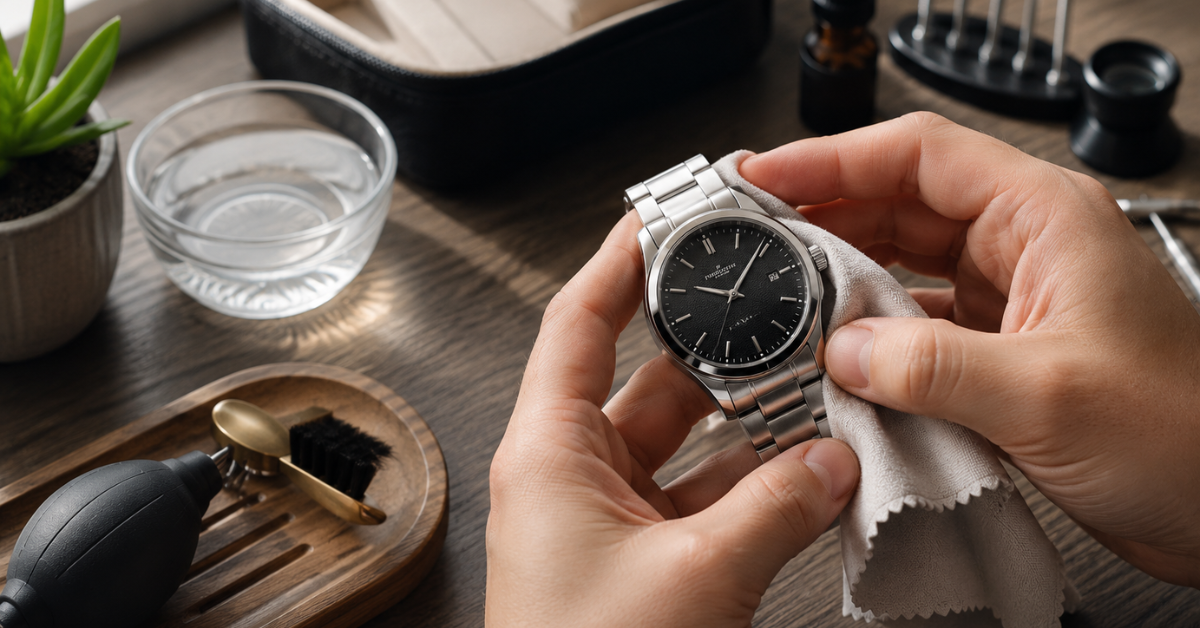
Clean it regularly, gently. A soft cloth handles most day-to-day grime. For water-resistant models specifically, Tissot notes that a toothbrush and mild soapy water is safe for cleaning the case and bracelet, followed by a thorough dry.
Keep chemicals away from the case and bracelet. Solvents, perfumes, and cosmetic products can damage gaskets and finishes on contact — a detail that's easy to overlook if you're used to spraying perfume or applying lotion with the watch still on.
Avoid strong magnetic fields. Loudspeakers, phones, laptops, and other electromagnetic devices can affect a mechanical movement's accuracy if a watch spends extended time in close contact with them. Tissot's Nivachron balance spring technology, used across several current collections, offers meaningfully better resistance to this than older spring materials — worth knowing if magnetic exposure is a regular part of your routine. Our piece on Tissot's Le Locle heritage touches on this movement technology in more detail if you're curious how it fits into the brand's broader engineering.
Avoid extreme or sudden temperature changes. Tissot specifically flags exposure to sunlight followed immediately by cold water immersion as a stress worth avoiding, along with sustained temperatures above 60°C or below 0°C.
Storage, Between Wears
If a mechanical Tissot sits unworn for more than a few days, it will run down and stop — that's expected, not a fault. Store it somewhere dry, away from direct sunlight and magnetic sources, and it'll be ready to reset and rewind whenever you pick it back up. A watch winder is optional, not necessary, for most owners; it's a convenience for automatics worn intermittently, not a requirement for the watch's health.
Strap and Bracelet Specifics
Steel bracelets handle daily wear and moisture well and clean easily with the soap-and-toothbrush method described above. Leather straps need more caution — avoid getting them wet where possible, since repeated moisture exposure shortens leather's lifespan noticeably faster than it affects steel. If you live somewhere humid or wear a leather-strapped Tissot near water regularly, switching to a rubber or metal option for that use case will save the leather strap considerable wear.
A Genuine Long-Term Reassurance
One detail worth knowing if you're thinking about a Tissot as a watch you'll keep for years: Tissot guarantees spare parts availability for a minimum of 10 years after a given model goes out of production. That's a real, practical commitment — it means a full service remains genuinely possible with original components well over a decade after a specific reference stops being sold, not just while it's still current in the catalog.
FAQ
How often should I get my Tissot serviced? Tissot recommends a complete service every 3 to 5 years, depending on the model and how the watch is used, with more demanding conditions potentially requiring a shorter interval.
How do I know when my Tissot's battery needs replacing? Most Tissot quartz models signal a weakening battery by having the second hand jump in two-second intervals instead of ticking every second — replace it promptly once you notice this to avoid potential battery leakage and movement damage.
Does water resistance on a Tissot last forever? No — the gaskets that provide water resistance degrade gradually over time regardless of care, which is why Tissot recommends an annual water resistance check for any watch regularly exposed to water.
Can I clean my Tissot with soap and water? For water-resistant models, yes — Tissot specifically notes that a toothbrush and mild soapy water is safe for cleaning the case and bracelet, followed by thorough drying with a soft cloth.
Will Tissot still have parts for my watch years after I bought it? Yes — Tissot guarantees spare parts availability for a minimum of 10 years after a model is discontinued, supporting servicing well beyond a watch's time in the current catalog.
Conclusion
Most of what keeps a Tissot running well for decades isn't complicated: a service every few years, prompt attention when the battery signals it's fading, an annual water-resistance check if the watch sees regular water exposure, and a bit of common sense around chemicals, magnets, and temperature extremes. None of it requires special expertise — just following the same guidance Tissot itself actually publishes, rather than generic watch-care advice that happens to have Tissot's name attached.
Senior Writer
James Whitfield
Senior watch writer with a decade covering Swiss horology, vintage markets and modern releases.