On this page
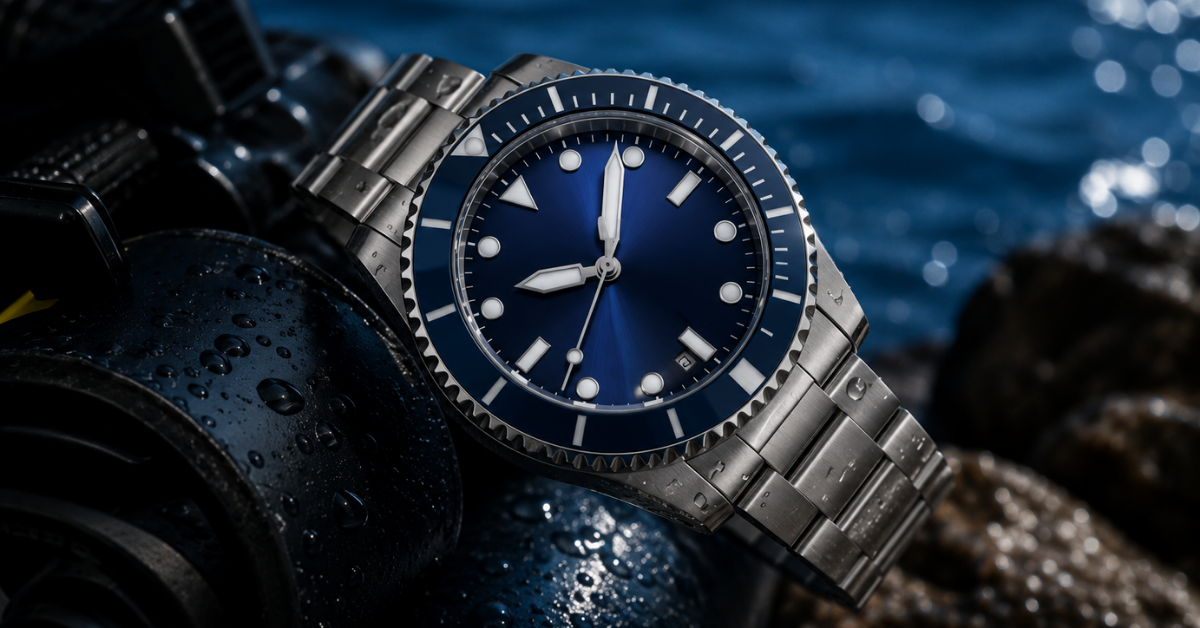
The Tissot Seastar 1000 Powermatic 80 is a 300-meter automatic dive watch available in 40mm and 43mm cases, running Tissot's Powermatic 80 movement with an 80-hour power reserve, a unidirectional ceramic bezel, sapphire crystal, and an exhibition caseback — commonly priced under $600 to $800 depending on dial and retailer. It's widely regarded as the most affordable genuinely Swiss automatic dive watch on the market. The honest trade-offs are a fairly plain dial design and a slower 21,600 vph movement beat rate, which produces a slightly less smooth second-hand sweep than higher-frequency automatic movements.
"Best value diver under $600" is a genuinely competitive category, and the honest answer is that the Seastar 1000 Powermatic 80 earns that title less through any single standout feature and more through what it doesn't cut to hit this price. Ceramic bezel, sapphire crystal, an 80-hour automatic movement you can watch through the caseback, and real 300-meter water resistance — all present, all genuine, at a price that undercuts most of the category outright.
This review covers what that actually gets you, and where the compromises genuinely show up, because a fair review needs both.
Where the Seastar Name Actually Comes From
Tissot's dive-watch lineage goes back further than the Seastar name itself. In 1930, Tissot released the Antimagnetique, credited as the first commercially available non-magnetic wristwatch — a genuine industry first, not a marketing claim. Through the following decade, working with the Swiss Laboratory for Watchmaking Research of Neuchâtel, Tissot developed models like the Camping (1938) and Aquasport (1939), engineered to be anti-magnetic, shockproof, and dust-tight with unbreakable glass. The Seastar name itself debuted in 1952, building directly on that foundation of water-resistant, rugged watchmaking rather than arriving as a standalone product.
That history matters here specifically because it means the Seastar's water-resistance credentials aren't a recent addition to Tissot's catalog — they're closer to the brand's original engineering identity. Our piece on Tissot's Le Locle heritage covers the broader manufacturing history behind that reputation.
The Specs That Actually Matter
The Seastar 1000 Powermatic 80 delivers 300 meters of water resistance — genuinely rated to that depth via a screw-down crown and caseback, not a marketing number that outpaces the actual engineering. The unidirectional ceramic bezel resists scratching far better than the aluminum inserts common at lower price points, and the sapphire crystal on top does the same job for the dial.
The movement is the real story at this price. Tissot's Powermatic 80, built on an ETA C07.111 base, delivers roughly 80 hours of power reserve — meaning the watch can sit unworn over a long weekend and still be running, and often still keeping reasonable time, when you pick it back up. It runs at 23 jewels and is visible through a sapphire exhibition caseback, a detail Tissot doesn't have to include at this price point and generally doesn't skimp on the finishing behind it — a visible "Tissot" engraving on the rotor is a small but genuine touch of craftsmanship you can actually see.
Case Sizes: 40mm vs. 43mm
The Seastar 1000 comes in two case sizes worth understanding before you buy. The original and still widely available 43mm version has real wrist presence — a genuine tool-watch scale, but one that can feel oversized on smaller wrists, particularly given its roughly 12.6mm to 12.7mm thickness. The newer 40mm version, a more recent addition to the line, keeps essentially the same specification sheet — 300m water resistance, 80-hour reserve, sapphire crystal — in a notably more wearable, everyday-friendly size.
If you're deciding between the two, the honest advice is straightforward: try the 43mm on your wrist before assuming it'll work, and lean toward the 40mm if you have any doubt. It resolves the sizing complaint that shows up most often in reviews of the larger version without giving up any of the underlying specification.
Where It Genuinely Falls Short
A fair review needs real criticism, not just a features list, so here's where the Seastar 1000 actually shows its price point.
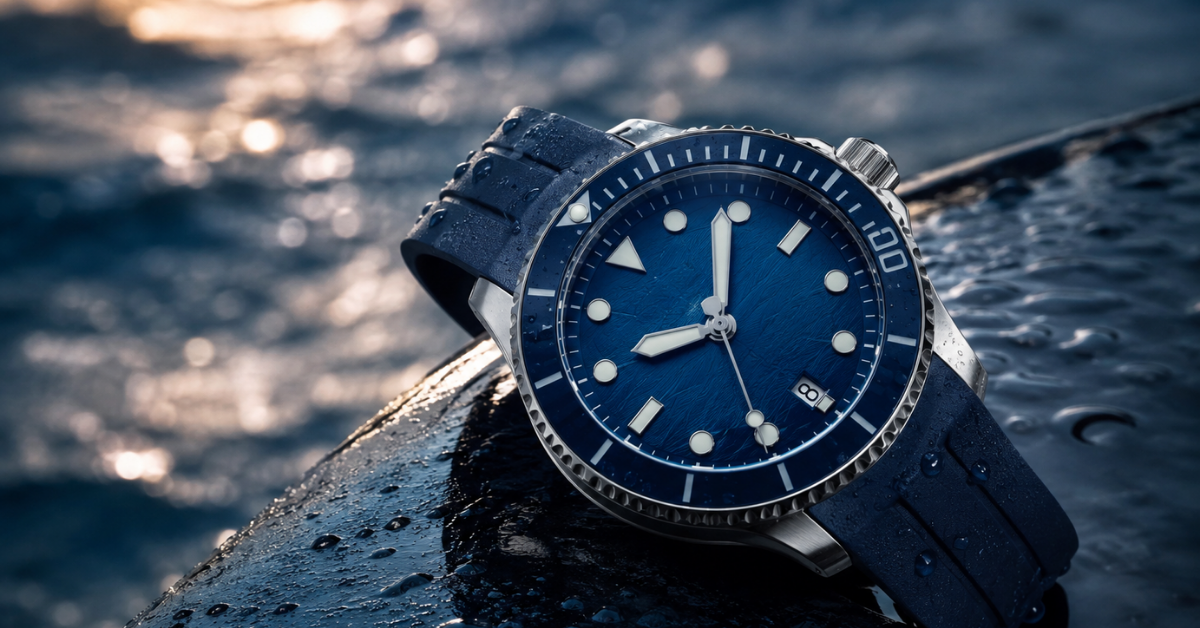
The dial design is fairly plain. Small hour indices and a straightforward layout do the job, but they don't compete visually with dive watches that lean harder into distinctive design at similar or even lower prices. If a dial that stands out in photos matters to you, this isn't where the Seastar wins.
The movement's beat rate is a genuine, noticeable trade-off. The Powermatic 80 runs at 21,600 vibrations per hour, slower than the 28,800 vph common on higher-end automatic movements. In practice, this means the second hand's sweep is visibly less smooth than what you'd see on a faster-beat movement — a real, observable difference if you're used to higher-frequency automatics, not a nitpick invented for the sake of balance.
Plastic components exist inside the movement. Some reviewers flag this as a concern; it's worth noting this isn't unusual at this price point, and materials like silicon have become genuinely common even in far more expensive watchmaking, so it's a less significant issue than it might initially sound.
None of these are disqualifying, but they're the honest reasons this watch costs what it costs rather than several times more.
Servicing and Care
Like any Powermatic 80-equipped Tissot, the Seastar 1000 benefits from the same maintenance fundamentals — periodic water resistance checks given how much this specific watch is likely to actually see water, avoiding magnetic fields, and a full service roughly every 3 to 5 years per Tissot's own published guidance. Our Tissot maintenance guide covers what that servicing actually involves and why the water-resistance check matters more on a genuine dive watch than on a dress piece that never gets near a pool.
Is It Actually the Best Value Diver Under $600?
Within the specific category of genuinely Swiss, genuinely automatic dive watches, the honest answer is close to yes. The combination of 300m water resistance, an 80-hour reserve, ceramic bezel, and sapphire crystal, all visible through an exhibition caseback, is difficult to match at this price from any comparably established Swiss manufacturer. The plain dial and slower beat rate are real trade-offs, not dealbreakers, and they're the kind of compromise you'd expect somewhere in a watch built to hit this specific price target. If you're comparing it against Tissot's own broader lineup, our Tissot Price Guide shows how the Seastar 1000 sits relative to the rest of the catalog.
Buying With Confidence
Given how frequently popular dive watches at accessible prices get counterfeited, buying from an authorized retailer removes any authentication guesswork. If you're considering a secondhand Seastar to stretch your budget further, our guide on authenticating a Tissot against "Swiss Made" fakes covers the checks worth running before you buy.
FAQ
How much does the Tissot Seastar 1000 Powermatic 80 cost? Generally under $600 to $800 depending on dial color, case material, and retailer, making it one of the most affordable genuinely Swiss automatic dive watches currently available.
What's the difference between the 40mm and 43mm Seastar 1000? Both share the same core specifications — 300m water resistance, 80-hour power reserve, sapphire crystal — but the 40mm wears more comfortably on smaller or average wrists, while the 43mm offers a larger, more traditional dive-watch presence.
Is the Powermatic 80 movement good in the Seastar 1000? It's a genuinely capable movement with an impressive 80-hour power reserve for the price, though its 21,600 vph beat rate produces a visibly less smooth second-hand sweep than faster movements found in some pricier automatics.
Is the Tissot Seastar 1000 actually water resistant to 300 meters? Yes — the rating is achieved through a genuine screw-down crown and caseback, not just a marketing figure, making it suitable for real swimming and recreational diving.
Is the Seastar 1000 a good first automatic watch? It's a strong candidate — genuine Swiss manufacturing, a visible movement through the exhibition caseback, and real dive-watch capability at a price that makes it an accessible entry point into mechanical watches.
Conclusion
The Seastar 1000 Powermatic 80 earns its "best value diver under $600" reputation honestly — not by being flashy, but by including genuinely capable specifications at a price that undercuts most of its category. The plain dial and the movement's slower beat rate are real, worth knowing about before you buy, but neither undermines what's otherwise a legitimately well-built, genuinely water-capable Swiss automatic watch.
Senior Writer
James Whitfield
Senior watch writer with a decade covering Swiss horology, vintage markets and modern releases.