On this page
The Tissot T-Touch uses a genuinely unusual technology: the sapphire crystal itself is the interface, with piezoelectric sensors embedded directly in the crystal so pressing different zones activates functions like a compass, altimeter, weather forecast, or chronograph. Tissot created the world's first tactile watch in 1999, years before smartphones existed. The current lineup spans the instrument-focused T-Touch Expert Solar (roughly $700 to $900), the smartphone-connected T-Touch Connect Solar, and the smaller T-Touch Connect Sport ($995 to $1,075). Most everyday buyers don't need what it offers — but for genuine outdoor use paired with a dislike of smartwatch battery anxiety, it fills a real, narrow niche nothing else quite matches.
The honest answer to "does anyone need a tactile watch" is that almost nobody does in the strict sense — and a genuine minority of buyers will find it solves a real problem nothing else quite addresses as elegantly. Understanding which category you fall into requires actually knowing how the technology works and what the current lineup does differently from a normal Tissot, or a normal smartwatch.
What Makes It "Tactile" in the First Place
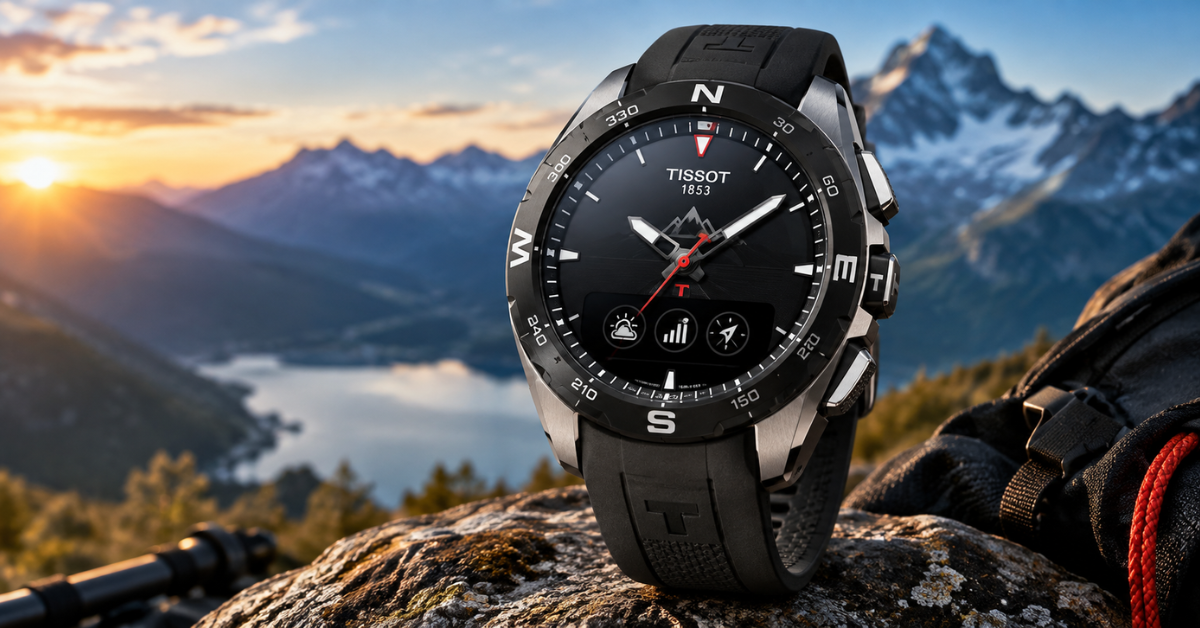
This isn't a touchscreen watch in the way that phrase usually means. Rather than a digital display under a separate layer of glass, the T-Touch's sapphire crystal itself functions as the interface — piezoelectric sensors embedded directly within the crystal detect pressure at different zones on its surface, each zone triggering a different function. From a glance, it reads as a conventional analog watch face; press the right spot on the crystal, and it becomes an altimeter, compass, or timer.
That's a genuinely difficult engineering problem. Sapphire is rated 9 on the Mohs hardness scale, second only to diamond among substances used in watchmaking — embedding functional sensors into material that hard without compromising its clarity or structural integrity takes real precision manufacturing. Tissot created the first version of this technology in 1999, a genuine watch-industry first that predates the smartphone entirely, and has spent more than 25 years refining it since.
The Current Lineup
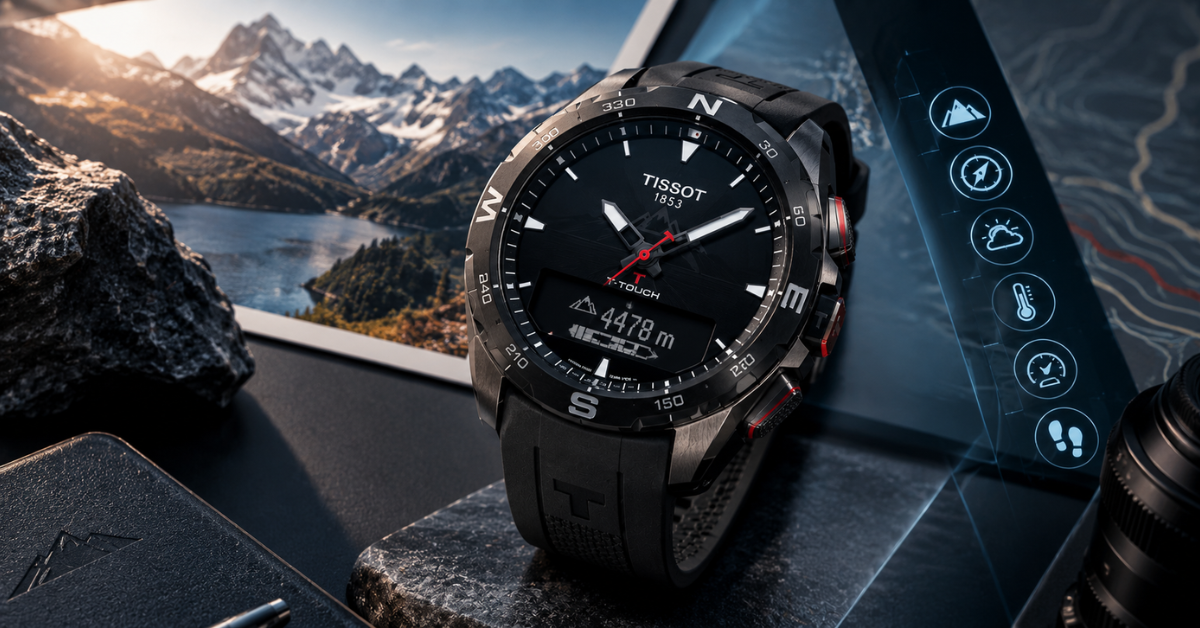
T-Touch Expert Solar, generally $700 to $900, is the purest instrument-watch version — no smartphone connectivity, just genuine outdoor functionality: perpetual calendar, countdown timer, second time zone, chronograph, compass, and meteorological and altimeter functions, all accessed through the tactile crystal. It runs on solar charging via the T091 movement, with a full charge providing roughly a year of power and normal daily light exposure keeping it running effectively indefinitely without battery replacement.
T-Touch Connect Solar builds on the same instrument foundation and adds smartphone connectivity — calls, texts, emails, and app notifications — managed through Tissot's own Sw-ALPS operating system, developed entirely in Switzerland and compatible with iOS, Android, and Harmony. A genuinely clever design choice here: the watch operates in two distinct modes. In "Watch" mode, disconnected from a phone, it functions as a complete T-Touch Expert Solar with all the same instrument capabilities. In "Connected" mode, it adds the notification layer on top. Solar charging again removes battery anxiety almost entirely — reported battery life runs up to six months connected, and more than ten years unconnected.
T-Touch Connect Sport, the newest and most compact version, drops the case size from the previous generation's 47mm down to a considerably more wearable 43mm titanium case at 12.8mm thick, using an AMOLED screen rather than the Connect Solar's low-energy MIP display. It's priced $995 for blue, orange, or white configurations and $1,075 for black or brown. Worth flagging honestly: this version's water resistance drops to 50 meters, compared to the Connect Solar's 100 meters — a real trade-off for the smaller case that's easy to miss if you're only comparing price and size.
What It Actually Does Well
The solar charging is the genuine standout benefit, and it solves a problem that plagues most multifunction quartz and smartwatch competitors alike: battery anxiety. Never needing to swap a battery or plug in a charger, while still getting genuine outdoor instrument functionality, is a real, practical advantage for buyers who specifically dislike that maintenance routine. Combined with the hybrid design — looking and functioning like a normal analog watch until you actually need the tools — it fills a specific niche well: genuine field instrumentation without committing to full smartwatch aesthetics or battery habits.
What It Doesn't Do, Told Honestly
This needs to be said plainly: the T-Touch is not a competitor to a genuine smartwatch, and reviewers who've spent real time with it say so directly. It can't match an Apple Watch or comparable device on advanced health sensors, app ecosystems, or GPS mapping — what it does, it does well, but the feature set is deliberately narrower. If you're shopping for a full-featured smartwatch experience, this isn't built to compete on those terms.
There's also a genuine cost consideration worth knowing before you buy: the sapphire touchscreen crystal is a proprietary Tissot component, and replacing it if damaged costs meaningfully more than a standard sapphire crystal replacement would on one of Tissot's conventional watches. If you're rough on watches or drop things frequently, that's a real ownership cost to factor in.
So, Does Anyone Actually Need One?
Most buyers don't, and it's worth being direct about that rather than talking anyone into a niche product. If you want a genuinely capable daily watch — dress, sport, or otherwise — Tissot's standard quartz and Powermatic 80 lineup, covered across our Price Guide, serves that need at a lower price without paying for functionality you'll likely never use.
The buyer who genuinely benefits: someone who spends real time outdoors — hiking, mountaineering, general land-based sports — who wants actual instrument functions (compass, altimeter, weather) built into a watch rather than a phone, who specifically dislikes smartwatch charging routines, and who'd rather have selective phone notifications than a fully connected wrist computer. For that specific person, the T-Touch's combination of solar power, genuine tactile instrumentation, and optional connectivity is difficult to match anywhere else in Swiss watchmaking. For everyone else, it's an interesting piece of watch history worth appreciating — a genuine 1999 technological breakthrough — without necessarily being the watch to actually buy.
Buying With Confidence
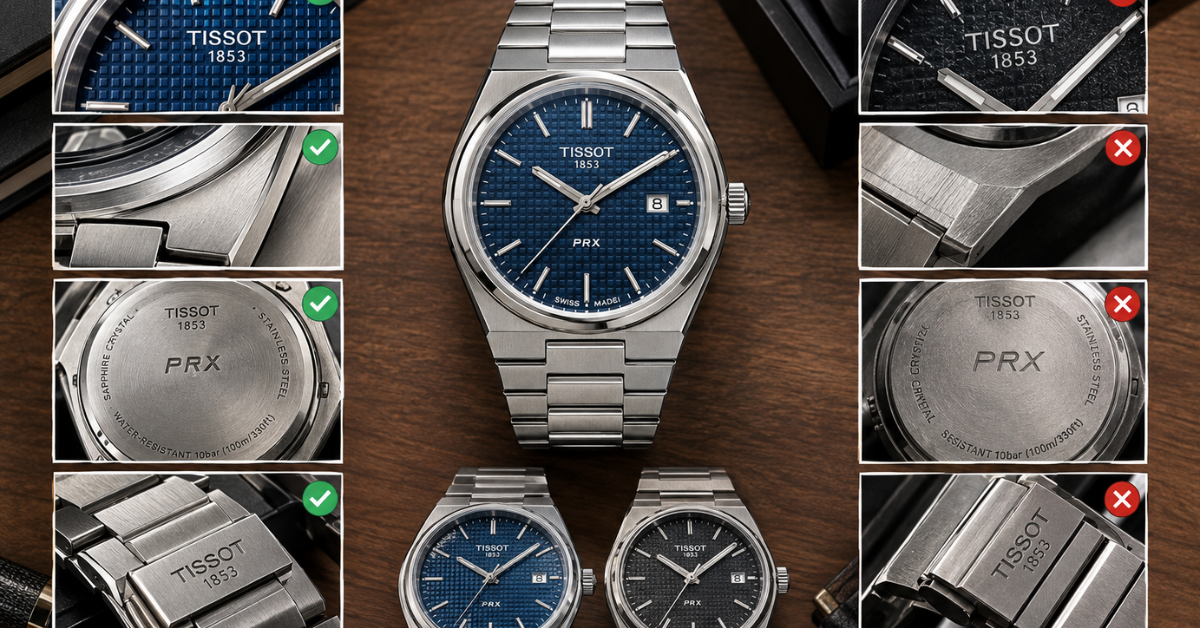
Given the T-Touch's premium price point and specialized technology, buying from an authorized retailer matters more than usual, since verifying the tactile crystal and internal electronics function correctly isn't something a casual pre-owned inspection easily catches. Our guide on authenticating a Tissot against "Swiss Made" fakes covers general Tissot authentication fundamentals worth applying to any purchase.
FAQ
How does the Tissot T-Touch's tactile crystal actually work? Piezoelectric sensors are embedded directly within the sapphire crystal, so pressing different zones on the crystal's surface activates different functions, rather than using a separate digital screen beneath the glass.
When did Tissot create the first tactile watch? 1999 — a genuine technological first in the watch industry, developed years before smartphones existed.
Is the T-Touch Connect Solar a real smartwatch? It offers smartphone notifications and connectivity through its own Sw-ALPS operating system, but it's not built to compete with a full smartwatch on advanced health sensors or app ecosystems — it functions as a hybrid instrument watch with optional connectivity layered on top.
How long does the battery last on a solar T-Touch model? Reported battery life runs up to six months when actively connected to a smartphone, and more than ten years when used unconnected, since normal daily light exposure keeps the solar charging system topped up.
Is the T-Touch worth the price premium over a standard Tissot? Only for buyers who genuinely need its instrument functions — compass, altimeter, weather, solar charging — for real outdoor use; buyers who just want a reliable daily watch are better served by Tissot's standard quartz or Powermatic 80 lineup at a lower price.
Conclusion
The T-Touch is a genuinely impressive piece of watchmaking history — a 1999 technological breakthrough that still works uniquely well a quarter-century later — but it's built for a specific kind of buyer, not everyone. If you spend real time outdoors and want genuine instrument functions without full smartwatch commitment, it earns its price honestly. If you just want a great watch for daily wear, Tissot's standard lineup will serve you better for considerably less.
Reviews Editor
Sofia Marchetti
Reviews editor focused on dive watches, chronographs and everyday wearability.