
On this page
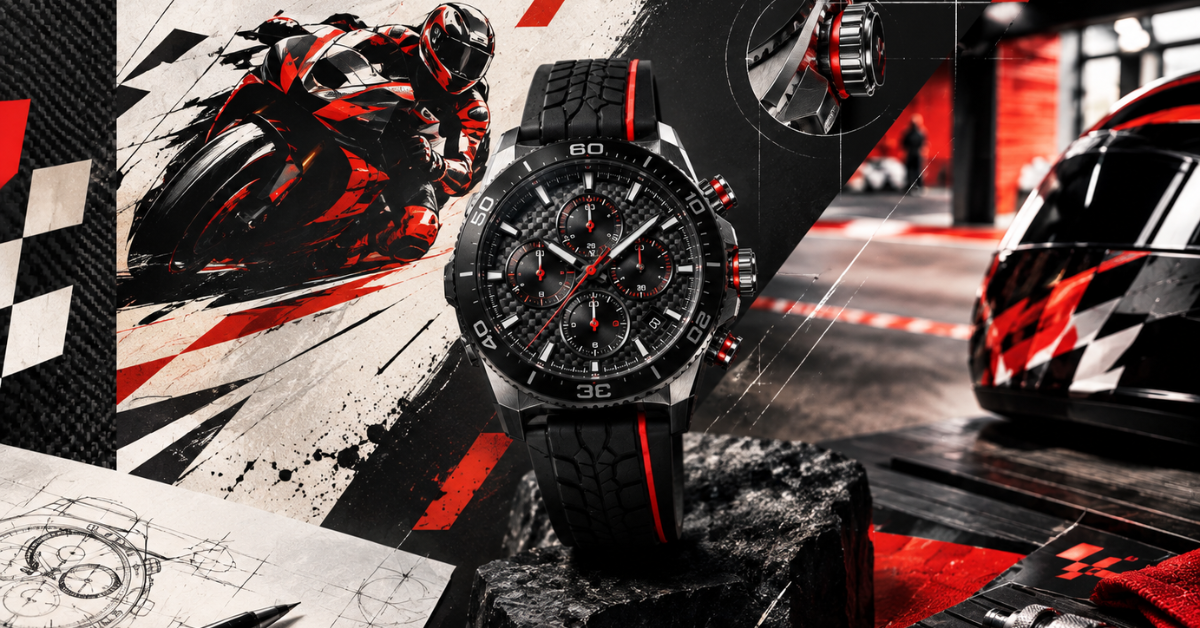
The Tissot T-Race MotoGP comes in two very different 2026 tiers: a quartz chronograph at $775, limited to 8,000 pieces, and an automatic chronograph around $2,095 to $2,650 depending on region, limited to 2,026 pieces. The automatic's real draw is its movement — the Valjoux A05.951, a modified version of the venerable Valjoux 7750/7753 that chronograph enthusiasts genuinely regard as one of the more desirable movements in this price range, paired with an antimagnetic Nivachron balance spring. The design itself is deliberately loud — a brake-disc bezel, engine-cooling-fin case sides, handlebar-inspired pushers — built for buyers who want that motorsport literalism, not a subtle daily chronograph. Tissot has been the official timekeeper of MotoGP since 2001, and the T-Race collection, launched in 2003, is the most direct expression of that partnership in the current lineup. This isn't a subtle sports watch with a racing pedigree mentioned in the marketing copy — it's a watch built around motorsport design language literally, down to a bezel shaped like a brake disc. Whether that's a feature or a dealbreaker depends entirely on what you're looking for, and this review covers both tiers honestly.
Two Very Different Watches Under One Name
For 2026, the T-Race MotoGP splits into two genuinely distinct pieces, not just a strap or dial variation on the same core watch.
The quartz chronograph (reference T1414173742200) is the more accessible entry point at $775, limited to 8,000 numbered pieces. It runs a quartz chronograph movement with SuperLumiNova-coated hands, a scratch-resistant sapphire crystal with anti-reflective coating, and 100 meters of water resistance — solid, genuine specifications at a price that keeps the watch within reach of buyers who want the MotoGP design story without a four-figure commitment.
The automatic chronograph (reference T1414622705100) is a different proposition entirely, priced around $2,095 in the US and closer to $2,650 in some other regions once local pricing and taxes are factored in, limited to just 2,026 numbered pieces — a nod to the release year. This is where the watch's real engineering case gets made.
The Automatic's Real Draw: The Valjoux A05.951
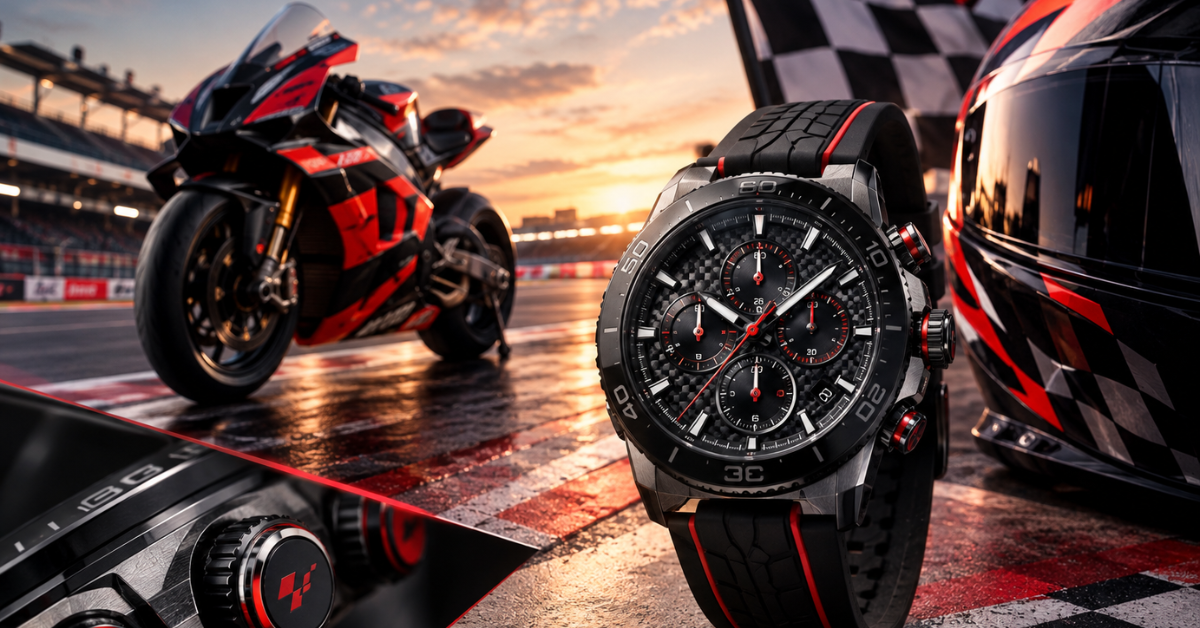
This is worth explaining properly, because it's the actual reason the automatic version justifies its considerably higher price rather than just carrying a bigger MotoGP logo. The movement is the Valjoux A05.951, a modified evolution of the Valjoux 7750/7753 — a chronograph caliber with a genuinely respected pedigree among watch enthusiasts, widely regarded as one of the more desirable movements available at this price point specifically because of that lineage. It operates at 28,800 vibrations per hour, delivers a 68-hour power reserve, and uses a cam-actuated chronograph system rather than a simpler, less refined lever mechanism.
The movement also incorporates a Nivachron balance spring, the same antimagnetic material technology found across other current Tissot references — our Tissot Movements Explained guide covers how Nivachron compares to Tissot's other movement technologies in more technical depth, useful context for understanding this specific upgrade's real value rather than treating it as a marketing checkbox. The dial is openworked, giving a partial view of the movement's gear train and chronograph works in action — a genuine engineering showcase, not just a cosmetic skeleton cutout.
The Design Is Deliberately Loud
This needs to be said plainly, because it's the single factor most likely to make or break this watch for a given buyer. The case construction quotes motorcycle mechanics literally: engine-cooling-fin detailing along the mid-case, oversized pushers styled after handlebar controls, and a bezel shaped like a brake disc — a forged-carbon insert on the automatic version, black PVD coating throughout. Both watches ship in a helmet-shaped presentation box rather than a standard case.
This is not a restrained, versatile chronograph in the way the Gentleman or PRX aim to be — it's a deliberately maximalist motorsport design, and it reads that way from across a room. For MotoGP fans and buyers who specifically want that unapologetic racing aesthetic, that's precisely the appeal. For buyers who want a chronograph that reads as more broadly wearable in a wider range of settings, it's worth being honest that this watch isn't built for that job.
So, Is It Worth It?
The honest answer splits by tier and by buyer.The quartz version at $775 makes a genuinely reasonable case on its own terms: real Swiss manufacturing, solid specifications, a limited numbered production run, and 25 years of authentic MotoGP partnership behind the design rather than a borrowed license. If the aesthetic speaks to you and you don't need a mechanical movement, it's a fair value within the limited-edition chronograph space.The automatic version at roughly $2,095 and up is a harder case to make universally, and it's worth being direct about that rather than reflexively praising the specs. The Valjoux A05.951 is a genuinely strong, well-regarded movement, and that alone justifies real interest from chronograph enthusiasts specifically. But at this price, you're competing against a considerably wider field of serious Swiss chronographs, and the MotoGP-specific design language is genuinely divisive — not a watch most people would call a safe, versatile choice. If you're drawn to it because you're a MotoGP fan or a chronograph enthusiast who specifically values what the Valjoux movement represents, it earns its price honestly. If you're shopping more generally for "a nice Tissot chronograph," the standard, non-limited T-Race lineup — generally $440 to $970 depending on quartz or automatic configuration — delivers the same core design language at a considerably more accessible price, without the limited-edition premium.
If You Want a More Versatile Tissot Instead
Worth saying directly: if the T-Race's motorsport-literal design isn't quite your daily-wear aesthetic but you still want genuine Tissot automatic engineering, our Gentleman Powermatic 80 review covers a considerably more understated option built specifically for broad everyday versatility rather than motorsport statement-making. Our Tissot Price Guide also puts the T-Race Automatic's roughly $2,000-plus price point in context against the rest of Tissot's current lineup, most of which sits considerably lower.
Buying With Confidence
Given the T-Race MotoGP's limited production runs and genuine collector interest, buying from an authorized Tissot retailer removes any authentication risk on what's already a meaningful purchase at the automatic tier. Our guide on authenticating a Tissot against "Swiss Made" fakes covers what to check before any purchase, new or pre-owned.
FAQ
What's the difference between the Tissot T-Race MotoGP quartz and automatic? The quartz version costs $775 and runs a quartz chronograph movement, while the automatic runs the more sought-after Valjoux A05.951 mechanical chronograph movement at roughly $2,095 and up, with a considerably higher limited-edition production run of just 2,026 pieces.
Is the Valjoux A05.951 a good movement? Yes — it's a modified evolution of the well-regarded Valjoux 7750/7753, genuinely considered one of the more desirable chronograph movements available at this price point among watch enthusiasts.
How long has Tissot been associated with MotoGP? Since 2001, when Tissot became the official timekeeper of MotoGP, with the T-Race collection specifically launching in 2003 as the most direct design expression of that partnership.
Is the T-Race MotoGP a good everyday watch? It depends on your taste — its deliberately bold, motorsport-literal design (brake-disc bezel, engine-cooling-fin case) reads as a statement piece rather than a subtle daily chronograph, so buyers wanting broader versatility may prefer Tissot's Gentleman or PRX lines instead.
Are there more affordable T-Race MotoGP options? Yes — outside the 2026 limited editions, Tissot's standard T-Race lineup generally runs $440 to $970 depending on quartz or automatic configuration, offering similar MotoGP-inspired design without the limited-edition premium.
Conclusion
The T-Race MotoGP's honest value proposition depends entirely on which tier and which buyer you're talking about. The quartz version delivers genuine value within the limited-edition space at $775. The automatic's roughly $2,000-plus price is a harder universal recommendation, but it's backed by real substance — a genuinely respected movement and 25 years of authentic racing partnership — for the specific buyer who wants exactly this kind of unapologetic motorsport statement on their wrist.
Reviews Editor
Sofia Marchetti
Reviews editor focused on dive watches, chronographs and everyday wearability.