On this page
- 1. Attempt to Register the Watch-Secure Code
- 2. Confirm the Code Matches Across All Three Places
- 3. Insist on Independent Inspection or an In-Person Meeting Before Paying
- 4. Request Specific, Close-Up Photos Before Committing
- 5. Cross-Check the Reference Number Against What It Should Actually Be
- A Practical Backup: Third-Party Marketplace Authentication
- What to Do If You're Still Not Sure
- FAQ
- Conclusion
The strongest single check when buying a Tissot from a private seller is attempting to register the watch's Watch-Secure (WS) code on Tissot's official website — a 9-character alphanumeric code engraved on the caseback since 2014. If the system recognizes and accepts the registration, that's a strong authenticity signal, since counterfeiters rarely have access to valid WS codes. Beyond that, confirm the code matches exactly across the caseback, warranty card, and RFID tag, insist on independent inspection before paying, request specific close-up photos, and cross-check the reference number against genuine Tissot specifications before you commit.
Buying from a private seller offers real savings over retail, but it also removes the safety net an authorized dealer provides automatically. These five checks cover both the tool Tissot itself provides and the buying practices that catch problems before they become expensive ones. For the fuller physical inspection checklist — dial printing, caseback engraving, movement details — our general guide to authenticating a Tissot covers that ground; this piece focuses specifically on what to do before and during a private transaction.
1. Attempt to Register the Watch-Secure Code
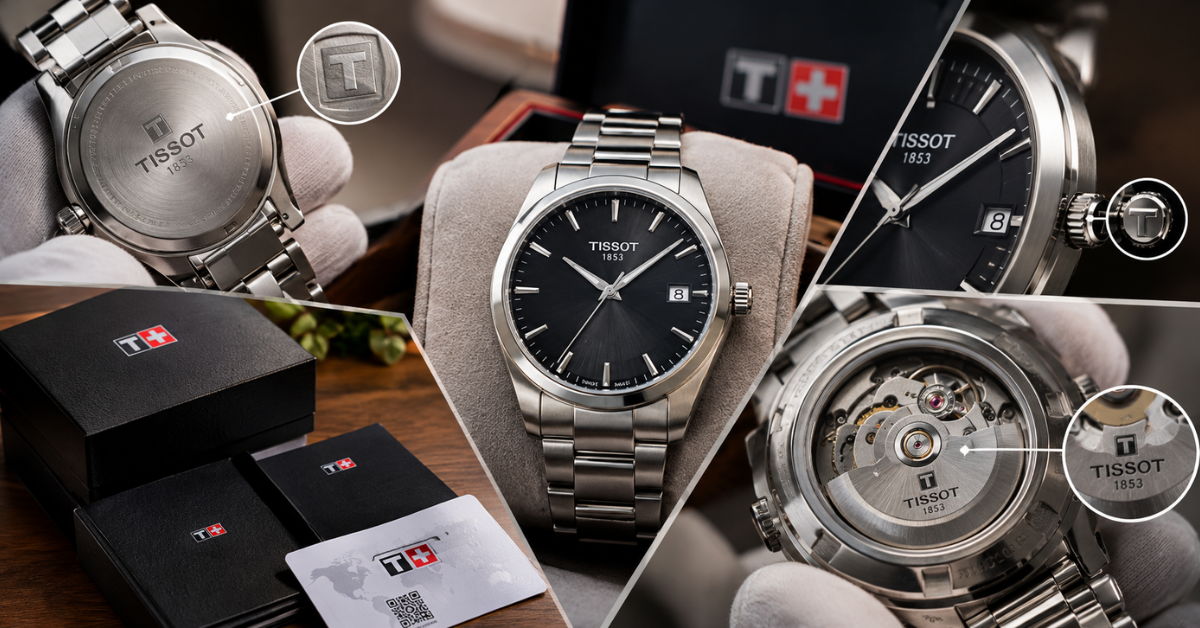
This is the strongest tool available, and it's genuinely underused by private buyers. Since 2014, Tissot has engraved a 9-character alphanumeric Watch-Secure (WS) code on the caseback of every current-production watch, positioned beside a small "WS" logo. The code deliberately excludes capital O and I to avoid confusion with 0 and 1.
Visit Tissot's official website and attempt to register the watch using this code. If the system recognizes it and allows registration, that's a strong, practical sign of authenticity — counterfeiters rarely have access to genuine, unused WS codes, since each one is tied to an individual watch at the point of manufacture. Registration also activates the warranty in your name, a real benefit beyond just verification. If the code is rejected, already registered to someone else in a way that doesn't match the seller's story, or simply doesn't exist on the watch at all, treat that as a serious reason to pause.
2. Confirm the Code Matches Across All Three Places
A genuine Tissot's WS code should appear identically in three locations: engraved on the caseback, printed on the international warranty or guarantee card, and included on the RFID tag if the original tag is still present. All three should match character for character. This is worth checking directly rather than assuming a seller's paperwork is accurate — a mismatch anywhere between these three sources is a legitimate red flag worth investigating before you commit to buying, regardless of how convincing everything else about the listing looks.
Worth noting if you're looking at an older piece: watches made before roughly 2014 won't have a WS code at all. Vintage Tissots instead carry a serial stamped on the movement plate or bridge, visible only with the caseback open, or in some cases engraved between the lugs. If you're buying vintage, this three-way matching check doesn't apply in the same way, and professional inspection becomes considerably more important since Tissot's own online registration system won't help you here.
3. Insist on Independent Inspection or an In-Person Meeting Before Paying
A private seller who refuses to meet in person, won't allow a professional to inspect the watch before payment, or insists on shipping-only with no verification option first is one of the clearest warning signs across documented buying scams generally, not just with Tissot specifically. A legitimate seller of a genuine watch has little reason to resist this — they have nothing to hide and every incentive to prove what they're selling is real. If a deal only works when you skip this step, that's worth treating as a red flag built directly into the offer, not a minor inconvenience the seller is understandably avoiding.
4. Request Specific, Close-Up Photos Before Committing
Ask for clear, detailed photos of the caseback WS code and reference number, the movement through a display back if the reference has one, and the warranty card itself. A genuine seller will generally provide these without hesitation. Reluctance, vague excuses about photography difficulty, or a seller who only offers the same handful of promotional-style images is a meaningful sign something may not add up. This is one of the easiest checks to run, since it costs you nothing but a direct question.
5. Cross-Check the Reference Number Against What It Should Actually Be
Every Tissot reference number, formatted like T137.407.11.041.00, encodes specific details about that watch — collection, case size, movement, and dial configuration. If a seller's claimed reference doesn't match the watch's actual case size, movement type, or price point, that mismatch is worth investigating directly. Our Tissot Price Guide gives you a real baseline to check a claimed reference and price against, and if you're specifically looking at a PRX, our PRX-specific fake-spotting guide covers additional checks unique to that collection's reference numbering and common counterfeit patterns.
A Practical Backup: Third-Party Marketplace Authentication
If you're buying through a marketplace that offers an optional authentication service — a multi-point inspection by an independent authenticator, sometimes bundled with insured shipping — it's generally a reasonable investment for a private purchase above a few hundred dollars, and often costs less than the peace of mind is worth. It's not a replacement for the checks above, but it's a useful additional layer, particularly for buyers less confident running the physical inspection checks themselves.
What to Do If You're Still Not Sure
Tissot's own customer service explicitly encourages buyers with doubts about a watch's origin to reach out directly or visit a nearest service center for a full analysis. This is a real, available option worth using if a private-sale watch clears some checks but leaves you uncertain — a professional inspection settles the question definitively in a way no amount of photo-checking fully can.
FAQ
How do I check if a Tissot's Watch-Secure code is genuine? Attempt to register it on Tissot's official website — if the system recognizes and accepts the code, that's a strong sign of authenticity, since counterfeiters rarely have access to valid, unregistered WS codes.
Where is the Watch-Secure code located on a Tissot? Engraved on the caseback beside a small "WS" logo, and also printed on the international warranty card and RFID tag if present — all three should match exactly.
Do vintage Tissot watches have a Watch-Secure code? No — the WS system began around 2014, so older watches instead carry a serial on the movement plate or bridge, or in some cases between the lugs, requiring a different verification approach.
What should I do if a private seller won't let me inspect a Tissot before paying? Treat it as a serious warning sign — a legitimate seller generally has no reason to refuse independent inspection or an in-person meeting before a sale completes.
Is a third-party marketplace authentication service worth paying for? Generally yes for private purchases above a few hundred dollars — it's not a substitute for your own checks, but it adds a genuine additional layer of verification, particularly if you're not confident running physical inspection checks yourself.
Conclusion
Tissot's Watch-Secure system gives private buyers something most watch brands don't offer as directly: a genuine way to check a specific watch's authenticity before you ever hand over money. Combine that registration check with the three-way code match, insisting on independent inspection, requesting real photos, and confirming the reference number actually matches what's being claimed, and you'll catch the overwhelming majority of problems before they become expensive ones.
Reviews Editor
Sofia Marchetti
Reviews editor focused on dive watches, chronographs and everyday wearability.