On this page
- 1. The Price Seems Too Good to Be True
- 2. The Same Watch Appears Across Multiple "Different" Sellers
- 3. The Site Looks Official But Hides Who's Actually Running It
- 4. A Seller Openly Admits They're Not Authorized, But Offers Their Own "Guarantee" Instead
- 5. The Same Dial Design Shows Up Across Watches Branded as Different Companies
- 6. Dial Printing Doesn't Match Multiple Verified Genuine Examples
- 7. The Seller or Website Disappears After Complaints Surface
- Why These Signs Matter as Much as Physical Inspection
- FAQ
- Conclusion
Tissot's own official guidance is direct: when a price seems too good to be true on an auction site or online marketplace, it usually means the watch is fake. Beyond pricing, documented buyer reports reveal specific, recurring patterns—the same watch and serial number listed simultaneously across multiple "different" sellers, a website designed to look officially branded while hiding who actually runs it, and sellers who openly admit they're not authorized dealers while still claiming to personally guarantee authenticity. These marketplace-level warning signs often surface before you ever get to inspecting the watch itself.
Our general guide to authenticating a Tissot and our private-seller verification guide cover the physical checks and person-to-person verification steps worth running. This piece focuses on something different: the marketplace and listing-level patterns that documented buyer reports show up again and again, often before a physical inspection ever becomes relevant.
1. The Price Seems Too Good to Be True
This is Tissot's own official position, stated plainly on the brand's dedicated counterfeit-warning page: when pricing on an auction site or online marketplace looks too good to be true, it usually is. The company specifically calls out auction sites and marketplaces offering extremely low prices as a primary counterfeit channel—not a vague generality, but Tissot's own direct guidance to consumers. If you're unsure what a specific model should actually cost, our Tissot Price Guide gives you a real baseline to check any listing against before getting drawn in by a discount.
2. The Same Watch Appears Across Multiple "Different" Sellers
This is a documented pattern worth knowing specifically: one buyer reported finding the identical watch, down to the same serial number, listed across five different seller accounts within a single week—not stock photography, actual photos of what appeared to be the same physical item, sold by supposedly unrelated international sellers. That kind of duplication across accounts is a genuine tell of a coordinated counterfeit operation running multiple listings simultaneously. If a reverse image search or a bit of cross-checking turns up the same specific watch under different seller names, treat that as a serious red flag rather than coincidence.
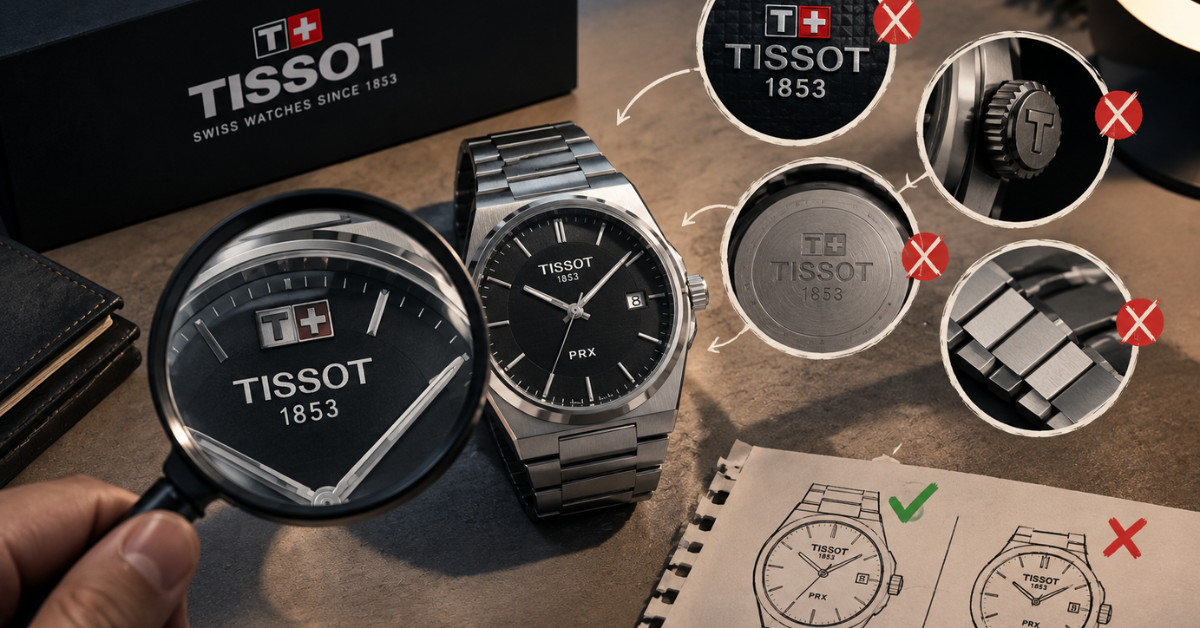
3. The Site Looks Official But Hides Who's Actually Running It
Tissot's own guidance specifically warns about websites "that confuse consumers with officially looking site designs but hiding their identity." This is a real, specific pattern—a site that borrows Tissot's visual language convincingly while providing no clear business registration, physical address, or verifiable ownership information. A legitimate authorized retailer has nothing to hide about who they are; a site designed to look official while obscuring that basic information is doing so for a reason.
4. A Seller Openly Admits They're Not Authorized, But Offers Their Own "Guarantee" Instead
This is worth understanding because it's a genuinely common pattern that catches even careful buyers off guard. In one documented case, a seller with a strong feedback history explicitly told a hesitant buyer they weren't an authorized Tissot dealer, which was why pricing was below retail, but they could personally "guarantee the authenticity" of their watches. That's worth treating with real skepticism regardless of how positive a seller's feedback history looks—a personal guarantee from an unauthorized seller carries none of the weight of Tissot's own official warranty and authentication backing, and Tissot's own policy states plainly that no warranty or service obligation applies to watches sold by unauthorized parties without an official stamped warranty certificate.
5. The Same Dial Design Shows Up Across Watches Branded as Different Companies
This is a genuinely revealing pattern documented in forum reports: a single seller offering watches under several different brand names—Tissot alongside other unrelated Swiss brands—all sharing the exact same dial design and movement. A legitimate multi-brand seller wouldn't have identical dials appearing across genuinely different manufacturers; that kind of overlap is a clear sign the "different brands" are actually the same counterfeit production run wearing different names.
6. Dial Printing Doesn't Match Multiple Verified Genuine Examples
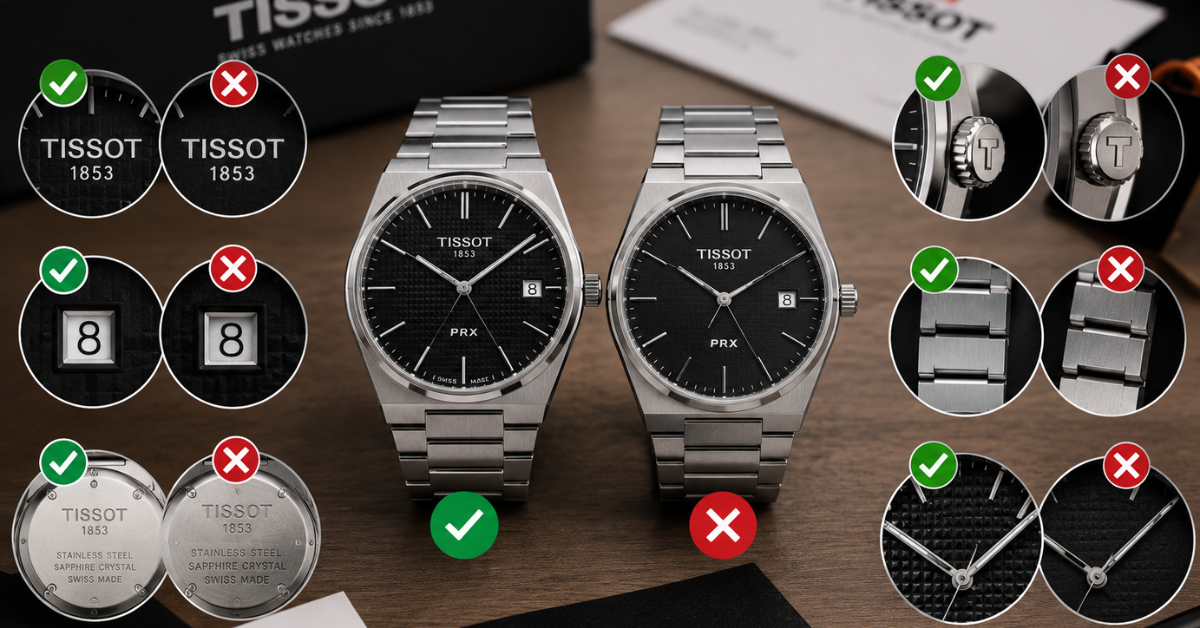
This is more of a methodology point than a single visual tell, and it's worth adopting as a habit. Rather than comparing a listing against just one reference photo, experienced buyers cross-check dial printing quality—font weight, spacing, sharpness—against several verified genuine examples of the exact same reference. A single comparison photo can be misleading; consistent deviation across multiple genuine references is a much stronger signal. If you're specifically evaluating a PRX, our PRX-specific fake-spotting guide covers the dial and case details unique to that particular collection.
7. The Seller or Website Disappears After Complaints Surface
This shows up repeatedly in documented buyer reports: a seller stops responding to messages after a sale, then the entire website goes offline shortly after complaints or chargebacks start accumulating. While this pattern is often only confirmed after the fact, it's worth checking preventively—search for the seller or site name alongside terms like "review" or "complaint" before buying, and be wary of sites with little independent verification of their business history or physical presence. A pattern of recent negative reviews describing non-delivery or confirmed counterfeits, especially alongside a site that's changed names or disappeared before, is a legitimate reason to walk away before you've paid anything.
Why These Signs Matter as Much as Physical Inspection
The honest reality is that the best counterfeits can pass a casual physical inspection, which is exactly why marketplace-level red flags matter as much as checking the watch itself. Our Watch-Secure verification guide covers Tissot's own official registration tool, one of the strongest checks available once you're actually evaluating a specific watch—but catching a problem at the listing stage, before you've engaged with a seller at all, is often the more efficient defense.
FAQ
What does Tissot itself say about counterfeit risk on marketplaces? Tissot's official guidance states plainly that pricing that seems too good to be true on auction sites or online marketplaces usually indicates a counterfeit and specifically warns against websites designed to look official while hiding their actual identity.
Is it a red flag if the same watch appears in multiple listings from different sellers? Yes—documented cases show the identical watch, including matching serial numbers, listed simultaneously across multiple supposedly unrelated seller accounts, a pattern consistent with a coordinated counterfeit operation.
Should I trust a seller who admits they're not an authorized Tissot dealer but offers their own guarantee? Treat this with real caution—an unauthorized seller's personal guarantee carries none of the weight of Tissot's official warranty, and Tissot's own policy states no service obligation applies to watches sold without an official stamped warranty certificate.
What does it mean if a seller offers the same dial design under different brand names? It's a strong indicator of a counterfeit operation—legitimate different manufacturers wouldn't share an identical dial design, so that overlap usually means the "different brands" are the same fake production run.
How can I check if a seller or website has a history of complaints? Search the seller or site name alongside terms like "review" or "complaint" before purchasing, and be cautious of businesses with little verifiable history, a hidden physical address, or a pattern of site name changes.
Conclusion
Most fake-Tissot advice focuses entirely on the watch itself, but documented buyer reports show the warning signs often surface earlier—in the listing, the seller's own words, or the pattern across multiple supposedly unrelated sellers. Catching these seven signs before you ever inspect a watch in person is often the more efficient way to avoid a counterfeit altogether, rather than relying on physical checks alone once money has already changed hands.
Reviews Editor
Sofia Marchetti
Reviews editor focused on dive watches, chronographs and everyday wearability.