On this page
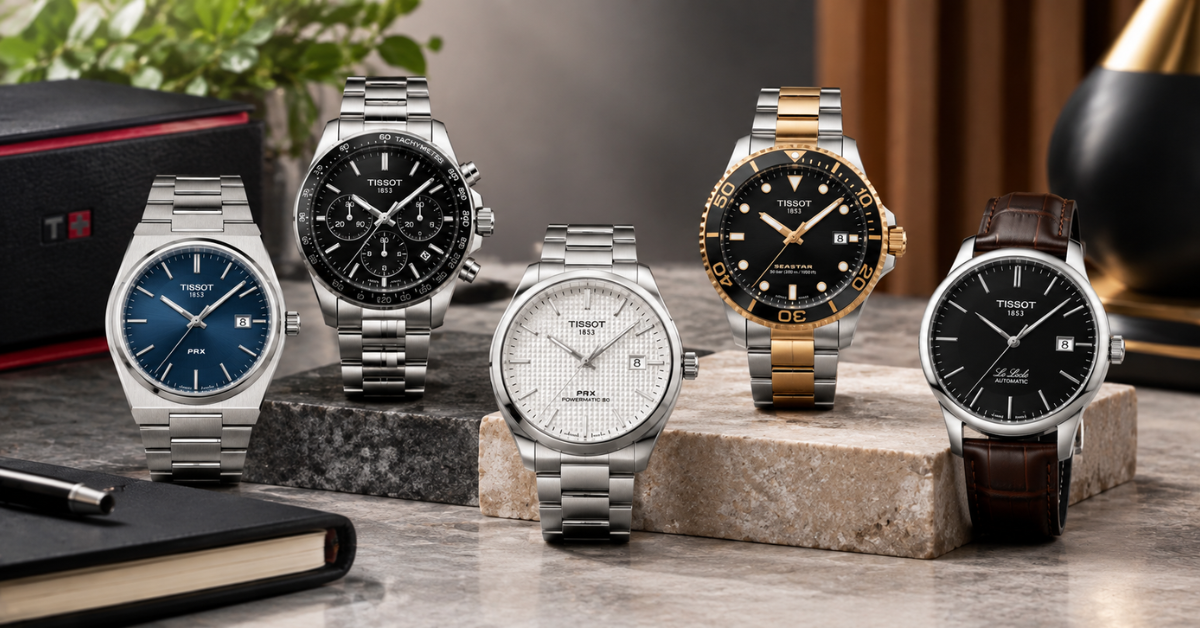
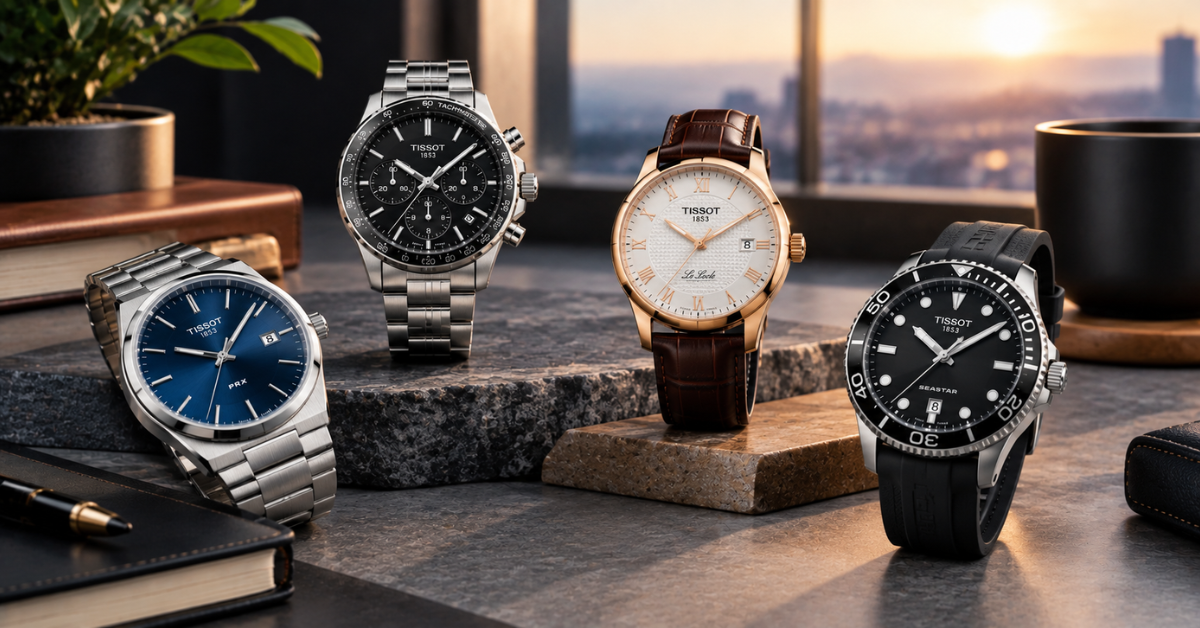
The best Tissot watches under $1,000 in 2026 are almost entirely Powermatic 80 automatics — genuine 80-hour-reserve mechanical movements rather than quartz. The strongest picks are the Gentleman Powermatic 80 (roughly $775 to $850), the PRX Powermatic 80 (roughly $650 to $750), the Seastar 1000 Powermatic 80 (roughly $600 to $800), and the Le Locle (roughly $550 to $750). All four deliver genuine Swiss automatic engineering with real power reserve, not a stripped-down version of what Tissot's pricier watches offer.
This is the budget where Tissot's automatic lineup actually opens up. Under $500, you're almost entirely shopping quartz — solid, genuinely Swiss, but without a mechanical movement inside. Push the ceiling to $1,000, and four watches become available that run Tissot's own Powermatic 80 platform, delivering a real 80-hour power reserve and genuine automatic engineering rather than anything scaled back to hit the price. If you're specifically shopping the tier below this one, our Best Tissot Watches Under $500 guide covers the strongest quartz picks instead.
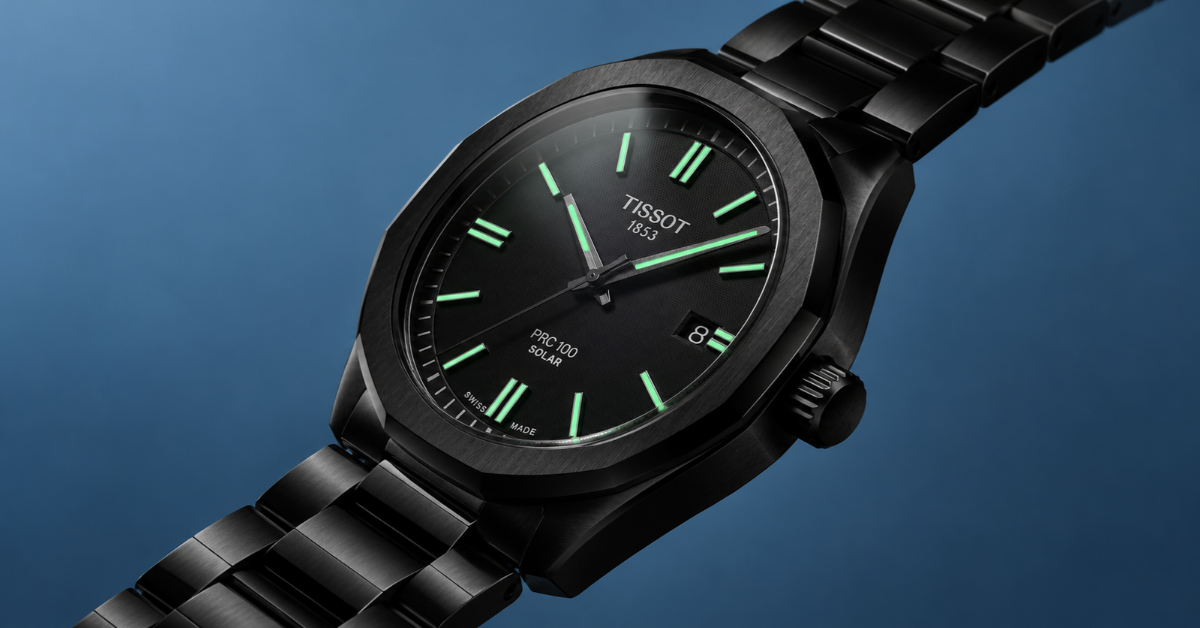
Gentleman Powermatic 80 (roughly $775 to $850)
The strongest all-rounder on this list, and arguably the watch that best explains why this price tier is worth stretching into. The Gentleman runs the Powermatic 80's Silicium variant in some configurations — a silicon balance spring upgrade over the standard Nivachron hairspring — inside a 40mm steel case with a genuinely versatile design that moves between office, weekend, and formal settings without looking out of place in any of them. It's earned an informal "Baby Rolex" nickname among enthusiasts for its Oyster-style bracelet and polished bezel, and owners who've compared it directly against Tissot's more design-forward options consistently report reaching for it more often. Our full Gentleman Powermatic 80 review covers the fit, the movement details, and how it stacks up against the PRX specifically.
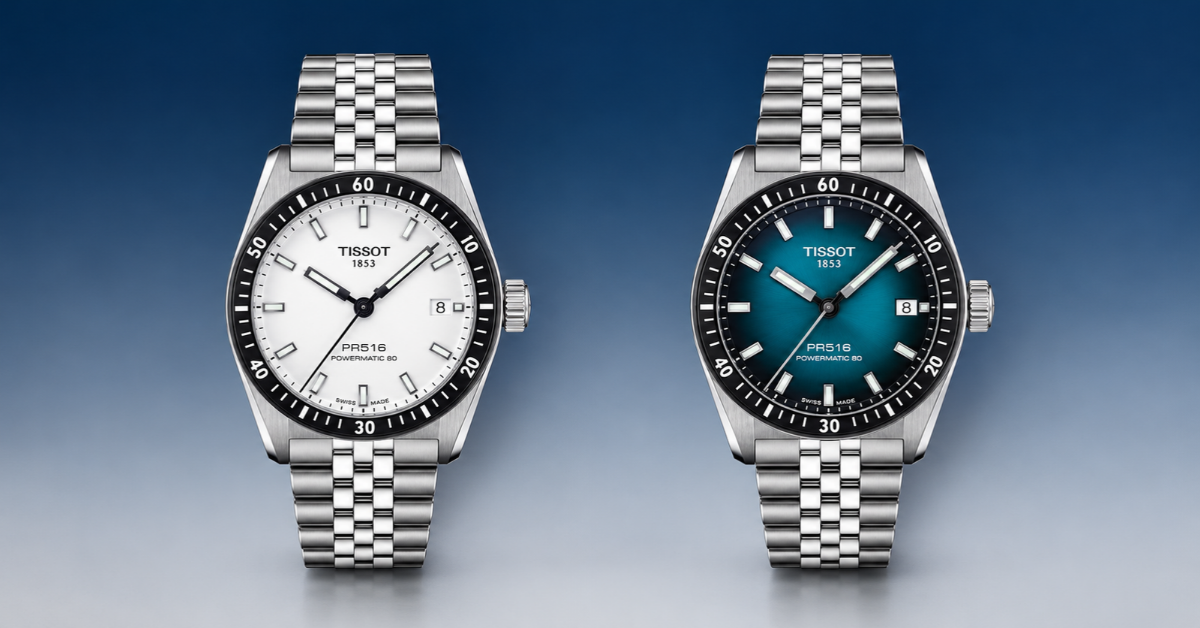
PRX Powermatic 80 (roughly $650 to $750)
The automatic version of Tissot's most talked-about current design — an integrated steel bracelet reviving a 1978 original, now paired with a genuine 80-hour automatic movement visible through an exhibition caseback. It runs thicker than the quartz PRX by about a millimeter to accommodate the automatic movement, and the dial's distinctive waffle texture makes it instantly identifiable next to its quartz sibling. If you're deciding between the quartz and automatic versions specifically, our PRX vs PRX Powermatic 80 comparison breaks down exactly what that roughly $300 premium buys you.
Seastar 1000 Powermatic 80 (roughly $600 to $800)
The pick for buyers who actually want to get a watch wet. Genuine 300-meter water resistance, a unidirectional ceramic bezel, and the same 80-hour Powermatic 80 movement found across this list, all at what's widely considered one of the most affordable genuinely Swiss automatic dive watches currently available. It's not a design showpiece — the dial is fairly plain, and the movement's slower beat rate produces a visibly less smooth second-hand sweep than some faster automatics — but neither compromise undermines what's otherwise a legitimately capable dive watch. Our Seastar 1000 review covers both the strengths and those honest trade-offs in full.
Le Locle (roughly $550 to $750)
The most classically dressed option on this list, and the one with a genuinely surprising credential behind it: a Tissot Le Locle Chronometer won the 2012 Concours International de Chronométrie, an independent precision competition, beating entries from considerably more expensive brands including F.P. Journe. That's a real result from an outside judging body, not a marketing claim, and it gives this comparatively affordable line more horological credibility than its price tag suggests. Named directly after Tissot's home manufacturing town, it's covered alongside that broader heritage story in our piece on Tissot's Le Locle history.
What You're Actually Getting at This Price
Every watch on this list runs some version of Tissot's Powermatic 80 platform, built on ETA-derived architecture and delivering roughly 80 hours of power reserve — more than double what a standard 38-hour automatic offers, meaning any of these watches can sit unworn over a long weekend and still be running when you pick it back up. That's a genuine trade-off worth understanding, not just a spec-sheet number: reaching 80 hours means a reduced movement frequency, which produces a visibly less smooth second-hand sweep than a standard higher-frequency automatic. Our Tissot Movements Explained guide covers that trade-off, and the Powermatic 80 platform generally, in full technical detail — useful background before choosing between any of the four watches above.
Choosing Between These Four
- Want the most versatile daily watch, full stop? Gentleman Powermatic 80.
- Want the most talked-about current design? PRX Powermatic 80.
- Want genuine dive-watch capability? Seastar 1000 Powermatic 80.
- Want the most classically dressed option, with real chronometer credibility behind it? Le Locle.
All four share the same core movement platform and roughly the same price band, so the right choice comes down to how you'll actually wear it, not which one is "better" in the abstract.
Buying With Confidence
At this price point, Tissot's popular models are frequent counterfeit targets precisely because they're so recognizable. Buying from an authorized retailer removes any authentication guesswork entirely. Our guide on authenticating a Tissot against "Swiss Made" fakes covers what to check before any purchase, new or pre-owned.
FAQ
What's the best Tissot watch under $1,000? It depends on use case — the Gentleman Powermatic 80 is the strongest all-around daily watch, the PRX Powermatic 80 offers the most distinctive design, and the Seastar 1000 offers genuine dive-watch capability, all in a similar price range.
Are Tissot watches under $1,000 automatic or quartz? At this price tier, the strongest picks are automatic, running Tissot's Powermatic 80 movement with roughly 80 hours of power reserve — quartz models dominate the tier below $500 instead.
Is the Tissot Le Locle a good value under $1,000? Yes — a Le Locle Chronometer won an independent precision competition in 2012, beating entries from significantly more expensive brands, giving the line real horological credibility at a comparatively modest price.
What's the difference between the Powermatic 80 in these four watches? The core movement technology is shared across the platform, though the Gentleman is available with the Silicium silicon-balance-spring upgrade in some configurations, offering additional shock and magnetic resistance over the standard version.
Should I service a Tissot watch under $1,000 the same way as a pricier one? Yes — Tissot recommends the same 3-to-5-year service interval for Powermatic 80 movements regardless of the watch's price, since it's the same underlying engineering across the platform.
Conclusion
Under $1,000, Tissot stops being a quartz-only conversation and starts delivering genuine automatic engineering across four genuinely distinct watches — a versatile daily piece, a design statement, a real diver, and a classically credentialed dress watch. None of them is a compromised version of something pricier; they're simply built around different priorities within the same core Powermatic 80 platform.
Senior Writer
James Whitfield
Senior watch writer with a decade covering Swiss horology, vintage markets and modern releases.